Answer Brief
This tutorial guides security teams in East Asia and globally on how to map public incident reports to MITRE ATT&CK techniques while preserving uncertainty, avoiding unwarranted attribution, and maintaining evidence traceability. It provides step-by-step workflow guidance for analysts, threat intel teams, and incident responders to use ATT&CK as a neutral taxonomy for structuring findings without inflaming confidence beyond what the source supports.
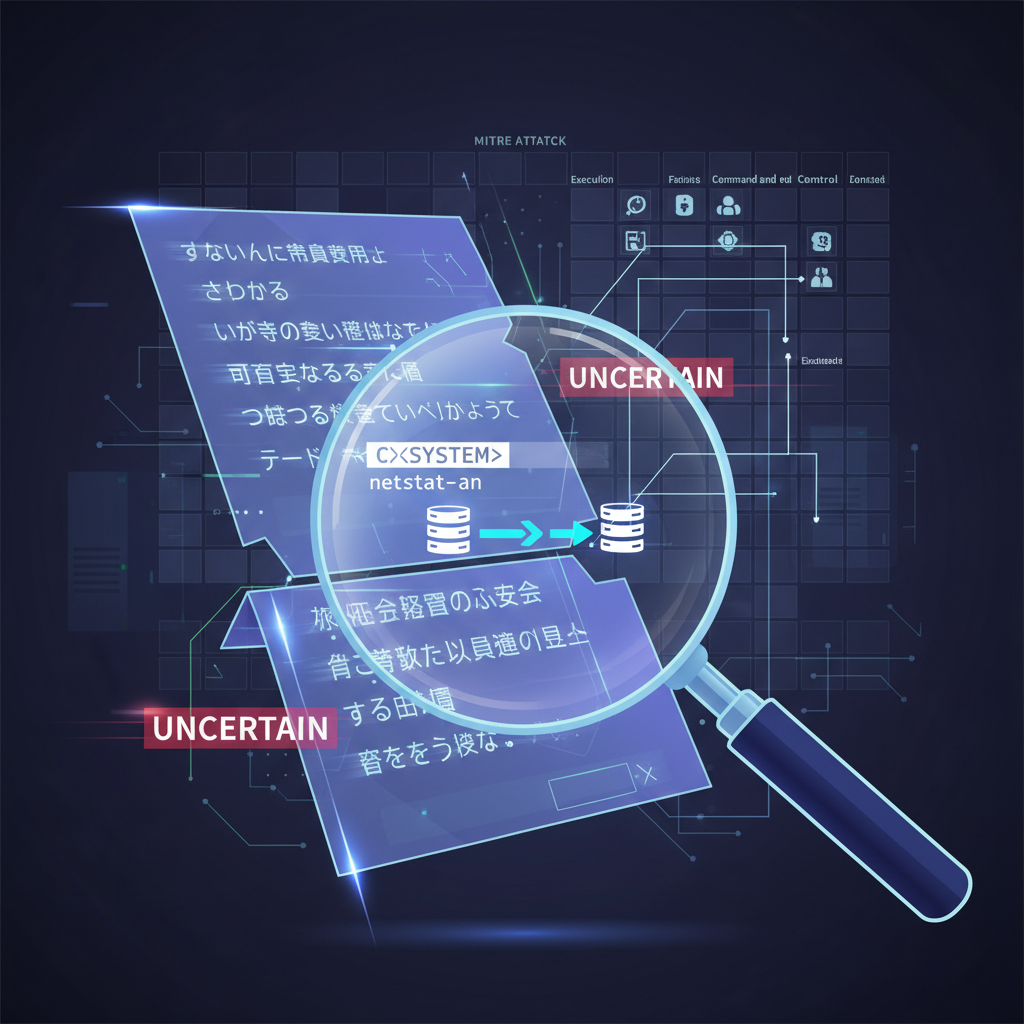
Executive Summary: This tutorial guides security teams in East Asia and globally on how to map public incident reports to MITRE ATT&CK techniques while preserving uncertainty, avoiding unwarranted attribution, and maintaining evidence traceability. It provides step-by-step workflow guidance for analysts, threat intel teams, and incident responders to use ATT&CK as a neutral taxonomy for structuring findings without inflaming confidence beyond what the source supports.
Why It Matters
This tutorial addresses a critical gap in threat intelligence practice: the tendency to overinterpret limited incident data when mapping to frameworks like MITRE ATT&CK. In East Asia, where public incident write-ups may vary in detail due to differing disclosure norms or language barriers, analysts face pressure to produce actionable ATT&CK mappings quickly. However, asserting techniques like 'Supply Chain Compromise' (T1195) based solely on a vague mention of 'third-party software risk' without evidence of compromised build tools or dependency manipulation introduces unwarranted certainty. The tutorial stresses that ATT&CK is a descriptive taxonomy of observed adversary behavior, not a predictive tool, and mappings must reflect only what is substantiated in the source material.
The core workflow begins with retrieving a credible East Asia incident report—such as a CERT advisory, vendor blog, or trusted media investigation—and extracting concrete, observable actions: specific commands executed, file hashes observed, network connections made, or authentication events logged. Each observed behavior is then compared to ATT&CK’s technique hierarchy, starting at the tactic level (e.g., Initial Access) and drilling down only if the report supports sub-technique specificity. For example, a report describing 'phishing emails with malicious links' supports T1566.002 (Spearphishing Link), but not T1566.001 (Attachment) unless attachments are explicitly mentioned. If the report only says 'targeted phishing,' the mapper should stop at T1566 (Phishing) and annotate the uncertainty.
Technical Signal
Decision criteria are central to avoiding overclaiming. Analysts should ask: Does the source directly describe this behavior? Is there technical evidence (logs, artifacts, network traces) supporting it? Could this be explained by another technique with equal or greater support? If the answer to any is no, the mapping should be deferred or labeled low-confidence. Escalation thresholds trigger when mappings are proposed for high-impact techniques (e.g., T1059 Command and Scripting Interpreter, T1078 Valid Accounts) without corresponding evidence—such as assigning PowerShell usage based solely on an actor’s known preferences without process creation logs in the incident report. In such cases, the mapping must be reviewed by a senior analyst before inclusion in threat intel products or detection rule development.
Ownership and next actions are clarified to ensure accountability. The threat intelligence analyst drafting the mapping owns initial evidence linkage and uncertainty tagging. The team lead or senior IR analyst owns final validation, ensuring no overconfident claims enter shared knowledge bases or detection pipelines. After mapping, teams should update internal trackers with source links, confidence levels, and open questions—such as 'sub-technique uncertainty for T1566' or 'no evidence of persistence mechanisms reported.' These items become monitoring priorities for future updates if additional forensic details emerge.
Operational Impact
Finally, the tutorial warns against using ATT&CK mappings to infer attribution, victimology, or future intent—common pitfalls when mapping East Asia incidents. A technique match does not imply a specific threat actor, nor does it predict lateral movement or data exfiltration unless those behaviors are documented. By anchoring mappings strictly to observable evidence and retaining source links, teams in East Asia and beyond can use ATT&CK as a shared language for defense planning without compromising analytical integrity. This approach supports global security teams seeking high-signal, regionally grounded intelligence that respects uncertainty while enabling practical detection and response improvements.
Treat the official source as a monitoring input, not as proof that every feed entry deserves a public article. The practical value is a repeatable triage layer: capture the source title, original URL, visible publication date, affected product or service when available, and the operational surface involved. When those fields are thin or ambiguous, the item should stay in the tracker as monitoring data rather than becoming a standalone post.
What To Watch
For readers watching East Asia, the escalation question is whether the notice touches a real local, national, regional, sector, or operating dependency. Supplier exposure, cloud identity, telecom, financial services, government systems, semiconductor or manufacturing links, public-sector technology, managed service providers, and internet-facing infrastructure are strong signals even before global media frames them as cross-border events.
A healthy workflow separates three outcomes. Routine items become searchable tracker records. Items with clear patch urgency, exploitation language, named affected technology, or cross-border supplier relevance become article candidates. Items that are old, duplicated, underspecified, or mostly vendor boilerplate should remain monitor-only even if they contain familiar cybersecurity keywords.
Event Type: security
Importance: medium
Affected Sectors
- cybersecurity
- incident response
- threat intelligence
Frequently Asked Questions
Why should I avoid overclaiming when mapping incidents to MITRE ATT&CK?
Overclaiming occurs when analysts assign high-confidence ATT&CK techniques based on insufficient evidence, leading to flawed threat models and misallocated defenses. This tutorial emphasizes preserving uncertainty by only mapping techniques when the incident write-up provides direct, observable support—such as logged command execution or network artifacts—and explicitly labeling low-confidence mappings as 'observed' or 'consistent with' rather than 'confirmed'.
How do I handle ambiguity in East Asia incident reports when using ATT&CK?
When source material lacks clarity—such as vague descriptions of 'spearphishing' without attachment or link details—map only to the parent technique (e.g., T1566 Phishing) and note the sub-technique uncertainty in your documentation. Use qualifiers like 'possibly' or 'consistent with' and retain links to the original report. Never infer sub-techniques like T1566.001 (Spearphishing Attachment) unless the report explicitly mentions malicious attachments or equivalent evidence.
Who should own the ATT&CK mapping process in a security team?
Threat intelligence or incident response leads should own the mapping process, with validation from senior analysts. Junior team members can draft initial mappings using the tutorial’s workflow, but final review must confirm that no attribution leaps or overconfident assertions were made. Document owners are responsible for preserving evidence links and uncertainty flags in shared repositories or trackers.
What should I do if an East Asia incident write-up mentions a technique not in ATT&CK?
If the described behavior does not match any existing ATT&CK technique, do not force a fit. Instead, record the observation as a potential gap in the framework and consider submitting it via MITRE’s Macrotechnique Refinement program. Clearly label it as 'unmapped behavior' in your analysis and retain the original source reference for future review when the knowledge base evolves.