Answer Brief
This tutorial guides East Asia-facing security teams on how to map observed AI misuse and model abuse signals to MITRE ATLAS techniques using a structured, uncertainty-aware approach. It emphasizes separating public facts from speculation, assigning clear ownership, and establishing flexible review workflows without relying on numeric thresholds or rigid escalation rules.
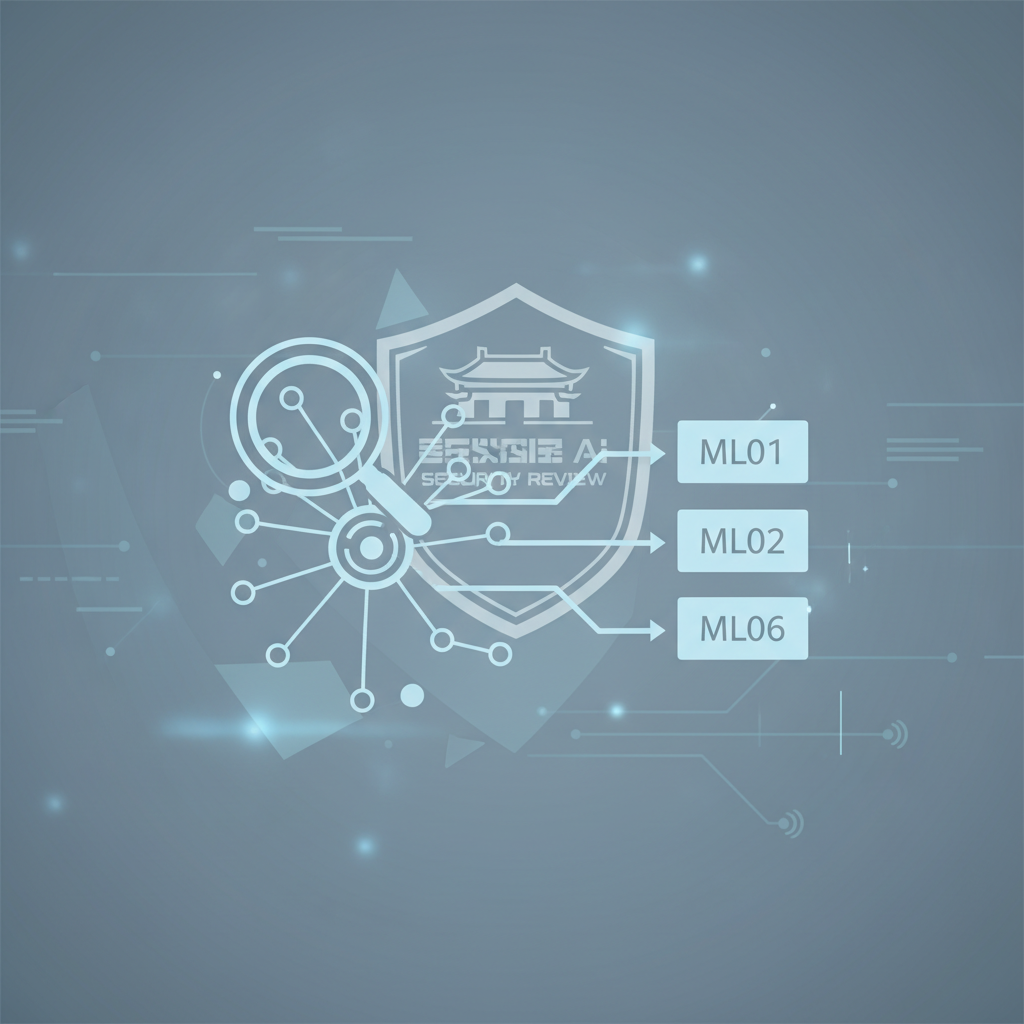
Executive Summary: This tutorial guides East Asia-facing security teams on how to map observed AI misuse and model abuse signals to MITRE ATLAS techniques using a structured, uncertainty-aware approach. It emphasizes separating public facts from speculation, assigning clear ownership, and establishing flexible review workflows without relying on numeric thresholds or rigid escalation rules.
Why It Matters
This tutorial provides a structured approach for East Asia-facing security, AI, and cloud operations teams to map observed AI misuse and model abuse signals to the MITRE ATLAS framework without succumbing to hype or overconfidence in attributions. The core principle is to treat ATLAS not as a detection tool but as a descriptive taxonomy for organizing behavioral signals — such as prompt injection, data poisoning, or model stealing — observed in public reports, threat feeds, or internal monitoring. The process begins with collecting verifiable, time-bound observations of AI system interactions in East Asia contexts, including language-specific abuse patterns (e.g., exploits targeting local-language LLMs) or regionally hosted model endpoints showing anomalous usage. Each observed behavior is then compared against ATLAS tactics and techniques (e.g., ML01: Prompt Injection, ML02: Data Poisoning) with explicit confidence labeling based on the quality and source of evidence. Teams are advised to avoid inferring adversary intent, capabilities, or affiliations unless directly supported by observed actions — for example, mapping a prompt injection attempt to ML01 does not imply the actor is state-sponsored or financially motivated unless such claims are publicly attested. Ownership of the mapping process should reside with threat intelligence or AI security leads, who must document sources, uncertainties, and alternative interpretations. Model developers, red teams, and trust & safety units can contribute context but should not override intelligence assessments. Decision criteria for escalation or further investigation are based on changes in observed behavior patterns, not fixed thresholds — such as a sudden increase in failed authentication attempts against model APIs or novel evasion techniques in data inputs. Escalation is recommended when mappings reveal techniques linked to ML06: Model Stealing or ML08: Exfiltration, particularly if tied to externally accessible models handling sensitive regional data (e.g., healthcare, finance, or government services in Japan, Korea, or Singapore). However, the guidance avoids prescribing numeric triggers or review schedules, instead advocating for event-driven reviews triggered by new model deployments, major updates, or credible abuse reports from regional CERTs like JPCERT/CC, KrCERT, or TWCERT/CC. The tutorial stresses separating Nogosee workflow guidance (e.g., routing items for review, preserving source links) from source-stated facts, ensuring that operational advice does not become conflated with threat intelligence claims. Finally, teams are encouraged to use ATLAS mappings to inform watchlist updates, red team scenarios, and vendor discussions — always grounding actions in observable signals rather than speculative narratives about AI-related risks in East Asia.
Treat the official source as a monitoring input, not as proof that every feed entry deserves a public article. The practical value is a repeatable triage layer: capture the source title, original URL, visible publication date, affected product or service when available, and the operational surface involved. When those fields are thin or ambiguous, the item should stay in the tracker as monitoring data rather than becoming a standalone post.
Technical Signal
For readers watching East Asia, the escalation question is whether the notice touches a real local, national, regional, sector, or operating dependency. Supplier exposure, cloud identity, telecom, financial services, government systems, semiconductor or manufacturing links, public-sector technology, managed service providers, and internet-facing infrastructure are strong signals even before global media frames them as cross-border events.
A healthy workflow separates three outcomes. Routine items become searchable tracker records. Items with clear patch urgency, exploitation language, named affected technology, or cross-border supplier relevance become article candidates. Items that are old, duplicated, underspecified, or mostly vendor boilerplate should remain monitor-only even if they contain familiar cybersecurity keywords.
Operational Impact
The useful reader task is comparison. Analysts should ask whether the same vendor, CVE family, attack surface, sector, or region appears across multiple sources. A single notice can be weak by itself, while a cluster across CERT, vendor, and security research sources can justify a higher-priority brief. Nogosee should preserve that distinction so the site behaves like an intelligence tracker instead of a rewrite feed.
For structured coverage, tag each record consistently by region, source, sector, technology surface, and monitoring status. That makes the database useful even on quiet news days because readers can still filter for technology, government, finance, healthcare, inspect current watchlist records, and decide which official source deserves direct follow-up.
Event Type: security
Importance: medium
Affected Sectors
- finance
- government
- healthcare
- technology
Frequently Asked Questions
What is the primary goal of mapping AI misuse signals to MITRE ATLAS in this tutorial?
The primary goal is to establish a repeatable, uncertainty-preserving process for categorizing observed AI misuse and model abuse behaviors in East Asia using ATLAS as a shared taxonomy, without overstating confidence or inferring unverified capabilities.
Who should own the ATLAS mapping process for AI misuse signals in an organization?
Threat intelligence or AI security teams should own the mapping process, with clear documentation of sources, observed behaviors, and uncertainty levels. Cross-functional input from model developers and red teams is encouraged for context, but ownership remains with the intelligence function.
How should teams handle uncertainty when mapping AI misuse signals to ATLAS techniques?
Teams should explicitly label mappings as low, medium, or high confidence based on source reliability and behavioral evidence, avoid presenting speculative links as facts, and document alternative interpretations. Publicly observable actions (e.g., prompt injection attempts) map more confidently than inferred motives or model-internal changes.
What are the recommended next steps after completing an ATLAS mapping exercise for AI misuse signals?
Next steps include reviewing mappings for consistency, updating internal threat models, sharing anonymized patterns with sector-specific ISACs or CERTs in East Asia, and scheduling recurring reviews when new model deployments or abuse reports emerge — without fixed cadences.
Why should East Asia-focused teams use MITRE ATLAS for AI misuse signal mapping instead of ad hoc taxonomies?
MITRE ATLAS provides a globally recognized, attacker-centric framework tailored to AI systems, enabling consistent communication across teams and regions. For East Asia operators, it supports alignment with local CERT advisories and regional threat reporting while maintaining compatibility with global intelligence sharing.