Answer Brief
This practical tutorial guides security teams through comparing CERT and vulnerability signals across Taiwan, Japan, and Korea for a single vendor using Nogosee's East Asia Cyber & AI Risk Tracker. It provides step-by-step workflow guidance for signal discovery, inspection, and monitoring without implying real-time urgency or inventing unsupported metrics.
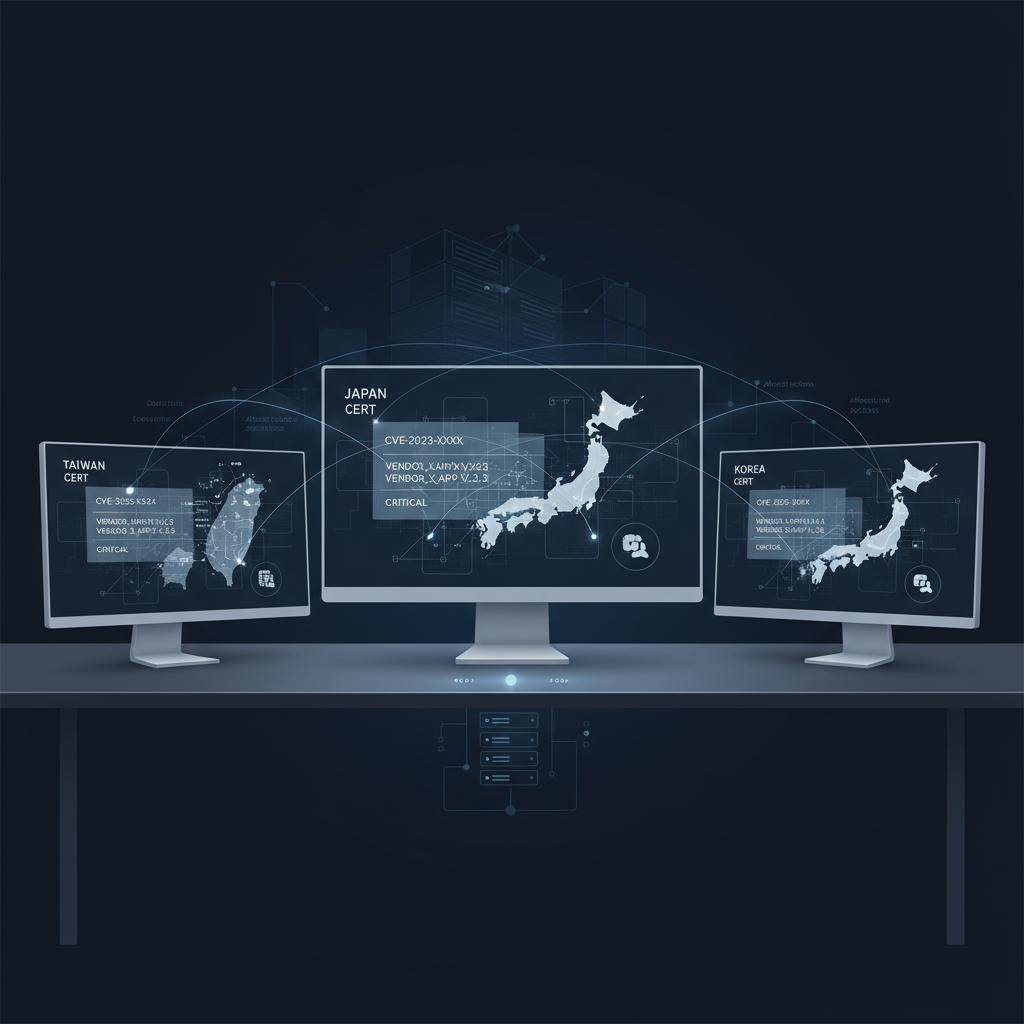
Executive Summary: This practical tutorial guides security teams through comparing CERT and vulnerability signals across Taiwan, Japan, and Korea for a single vendor using Nogosee's East Asia Cyber & AI Risk Tracker. It provides step-by-step workflow guidance for signal discovery, inspection, and monitoring without implying real-time urgency or inventing unsupported metrics.
Why It Matters
Security teams managing vendor risk in East Asia benefit from comparing CERT signals across Taiwan, Japan, and Korea to identify regional discrepancies in vulnerability disclosure, severity assessment, and remediation guidance. Nogosee’s public tracker supports this workflow by normalizing signals from source families into structured records with consistent metadata. The process begins with a targeted search using the vendor, product, or dependency name, optionally combined with regional presets or source-family filters to narrow results. This approach avoids noise while ensuring coverage of relevant advisories across the three primary East Asia markets monitored by the tracker.
Once signals appear, the next step is inspection: opening each source-linked record to compare key attributes such as CVE identifiers, publication timestamps, affected software versions, vulnerability types, and assigned severity scores. Teams should also review any accompanying technical details, including proof-of-concept exploit availability, patch status, and workaround recommendations. The tracker’s related collection pages can provide additional context, such as historical signals for the same vendor or linked threat intelligence, helping analysts determine whether a signal represents a new finding or a delayed regional disclosure.
Technical Signal
For ongoing monitoring, teams can export results using the tracker’s built-in tools. Capped CSV exports offer a lightweight snapshot of signal metadata, while indicator CSV files extract IOCs like file hashes or network patterns for immediate use in detection systems. RSS alert feeds enable passive monitoring of new signals matching a saved query, and copyable briefs allow quick sharing with stakeholders. Saving a filtered query as a watchlist ensures the same comparison can be repeated over time without reconfiguring filters, supporting regular vendor risk reviews.
Ownership of this workflow should be shared across functions. Vulnerability management teams typically lead the technical inspection, threat intelligence analysts add context on exploit trends and actor behavior, and third-party risk or procurement teams assess business impact and contract obligations. A designated coordinator can ensure signals are not duplicated or overlooked, especially when multiple regional sources report the same CVE with slight variations in timing or severity.
Operational Impact
Escalation decisions should be guided by observed risk rather than rigid thresholds. A signal from only one CERT—such as a KrCERT advisory not yet mirrored in JVN or TWCERT/CC—does not automatically imply lower risk. Instead, teams should evaluate exploitability, presence in exploit kits or threat feeds, and relevance to deployed assets. If a vulnerability is actively exploited or affects internet-facing systems, escalation may be warranted even without cross-regional consensus. The tracker’s priority radar and importance filters can help surface high-signal items, but final judgment rests with the analyst team based on asset exposure and operational context.
Finally, teams should treat this comparison as a repeatable operational practice rather than a one-time check. Regional CERTs may publish on different cadences due to internal processes, language translation, or coordination with vendors. By monitoring signals over time and maintaining visibility into source coverage gaps—such as those noted in the tracker’s methodology notes—teams can improve their ability to detect early warnings and respond consistently across East Asia operations.
What To Watch
Treat the official source as a monitoring input, not as proof that every feed entry deserves a public article. The practical value is a repeatable triage layer: capture the source title, original URL, visible publication date, affected product or service when available, and the operational surface involved. When those fields are thin or ambiguous, the item should stay in the tracker as monitoring data rather than becoming a standalone post.
For readers watching Taiwan, the escalation question is whether the notice touches a real local, national, regional, sector, or operating dependency. Supplier exposure, cloud identity, telecom, financial services, government systems, semiconductor or manufacturing links, public-sector technology, managed service providers, and internet-facing infrastructure are strong signals even before global media frames them as cross-border events.
A healthy workflow separates three outcomes. Routine items become searchable tracker records. Items with clear patch urgency, exploitation language, named affected technology, or cross-border supplier relevance become article candidates. Items that are old, duplicated, underspecified, or mostly vendor boilerplate should remain monitor-only even if they contain familiar cybersecurity keywords.
Treat the official source as a monitoring input, not as proof that every feed entry deserves a public article. The practical value is a repeatable triage layer: capture the source title, original URL, visible publication date, affected product or service when available, and the operational surface involved. When those fields are thin or ambiguous, the item should stay in the tracker as monitoring data rather than becoming a standalone post.
Event Type: security
Importance: medium
Affected Sectors
- Cybersecurity
- Government
- Technology
Frequently Asked Questions
How do I start comparing CERT signals for a specific vendor across Taiwan, Japan, and Korea?
Begin by entering the vendor name, product, or dependency into the Nogosee tracker search bar. Use regional presets or source families to filter signals. This isolates relevant advisories and vulnerability records for side-by-side review.
What should I look for when inspecting signals from different East Asia CERTs for the same vendor?
Open each source-linked record to compare priority levels, publication dates, affected versions, and vulnerability descriptions. Use related collection pages to gather context. Focus on technical details like CVE IDs, CVSS scores, and remediation guidance to assess consistency and urgency across regions.
How can I monitor or export CERT signal comparisons for ongoing vendor risk tracking?
Use the tracker’s export tools: capped CSV for limited datasets, indicator CSV for IOCs, RSS alerts for real-time updates, or copyable briefs for sharing. Save filtered queries as watchlists to repeat the comparison workflow regularly without rebuilding filters.
Who should own the process of comparing CERT signals across Taiwan, Japan, and Korea for vendor risk?
Vulnerability management, threat intelligence, and third-party risk teams should share ownership. Assign a lead to coordinate signal collection, while technical analysts inspect records and operations teams define escalation paths based on observed severity and exploitability.
When should I escalate a vendor signal observed in one East Asia CERT but not others?
Consider escalation when a signal indicates active exploitation, high severity, or affects critical infrastructure—even if only one CERT has published it. Use flexible judgment: verify exploitability, check for silent disclosure in other regions, and assess asset exposure before deciding on further action.