Answer Brief
Use the SLSA framework to evaluate supplier build integrity through neutral questions on provenance, signing, reproducibility, dependency pinning, and evidence artifacts—without accepting marketing claims as proof. This checklist supports East Asia-facing security, cloud, and supply-chain teams in verifying supplier assertions.
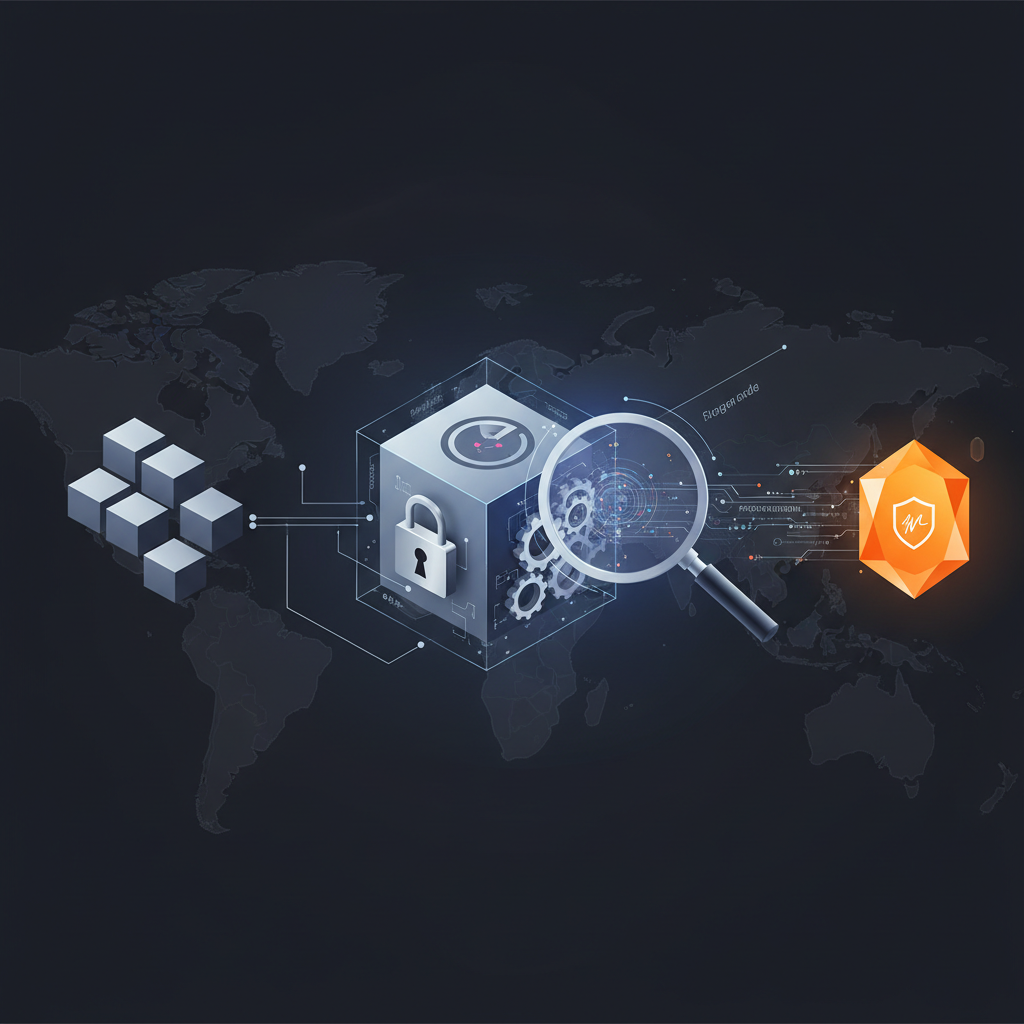
Executive Summary: Use the SLSA framework to evaluate supplier build integrity through neutral questions on provenance, signing, reproducibility, dependency pinning, and evidence artifacts—without accepting marketing claims as proof. This checklist supports East Asia-facing security, cloud, and supply-chain teams in verifying supplier assertions.
Why It Matters
The SLSA framework provides a practical, vendor-neutral approach to evaluating software supply chain integrity, particularly useful when suppliers claim to have a 'secure build pipeline.' Rather than accepting such claims at face value, security and procurement teams in East Asia and globally can use SLSA as a checklist to ask targeted, evidence-based questions. The framework focuses on four levels of assurance that progressively strengthen guarantees around source integrity, build process, dependency management, and provenance generation. At its core, SLSA shifts the conversation from trust to verification: it does not require perfection but asks for observable, auditable evidence that a software artifact was built as claimed and has not been tampered with.
For teams assessing suppliers, the first area to examine is provenance—cryptographically signed metadata that attests to how an artifact was built. Key questions include whether provenance is generated for every build, whether it is signed using a trusted key, and whether it includes sufficient detail such as build parameters, dependency versions, and environment information. Without verifiable provenance, there is no objective way to confirm that the artifact matches the source code or that the build process was not altered.
Technical Signal
Reproducibility is another critical dimension. SLSA encourages teams to ask whether a build can be reproduced bit-for-bit using the same inputs, which helps detect hidden dependencies or environmental drift. Suppliers should be able to demonstrate that their build process is hermetic—meaning it relies only on declared inputs and is isolated from uncontrolled variables. This reduces the risk of undetected modifications introduced during the build.
Dependency pinning is essential for preventing supply chain attacks through compromised or updated third-party components. Teams should verify that suppliers use exact, immutable versions of dependencies (e.g., via lockfiles) and that these pins are validated during the build process. SLSA does not mandate a specific tool but requires that dependency management be transparent, auditable, and resistant to tampering.
Operational Impact
Finally, evidence artifacts must be inspectable and independently verifiable. This means moving beyond self-attestations or policy documents to request tangible proof: signed provenance files, build logs, and verification scripts. In East Asia, where software supply chains often span multiple jurisdictions and involve complex outsourcing arrangements, this evidence-based approach helps teams cut through marketing language and focus on measurable integrity controls. By treating SLSA as a workflow guide—not a compliance mandate—teams can define clear escalation paths: if a supplier cannot provide verifiable answers to these questions, the claim of a 'secure build pipeline' should be treated as unproven, triggering further review or risk mitigation steps.
Treat the official source as a monitoring input, not as proof that every feed entry deserves a public article. The practical value is a repeatable triage layer: capture the source title, original URL, visible publication date, affected product or service when available, and the operational surface involved. When those fields are thin or ambiguous, the item should stay in the tracker as monitoring data rather than becoming a standalone post.
What To Watch
For readers watching East Asia, the escalation question is whether the notice touches a real local, national, regional, sector, or operating dependency. Supplier exposure, cloud identity, telecom, financial services, government systems, semiconductor or manufacturing links, public-sector technology, managed service providers, and internet-facing infrastructure are strong signals even before global media frames them as cross-border events.
A healthy workflow separates three outcomes. Routine items become searchable tracker records. Items with clear patch urgency, exploitation language, named affected technology, or cross-border supplier relevance become article candidates. Items that are old, duplicated, underspecified, or mostly vendor boilerplate should remain monitor-only even if they contain familiar cybersecurity keywords.
The useful reader task is comparison. Analysts should ask whether the same vendor, CVE family, attack surface, sector, or region appears across multiple sources. A single notice can be weak by itself, while a cluster across CERT, vendor, and security research sources can justify a higher-priority brief. Nogosee should preserve that distinction so the site behaves like an intelligence tracker instead of a rewrite feed.
For structured coverage, tag each record consistently by region, source, sector, technology surface, and monitoring status. That makes the database useful even on quiet news days because readers can still filter for technology, software development, cloud infrastructure, financial services, critical infrastructure, inspect current watchlist records, and decide which official source deserves direct follow-up.
Event Type: supply_chain
Importance: medium
Affected Sectors
- cloud infrastructure
- critical infrastructure
- financial services
- software development
- technology
Frequently Asked Questions
What is SLSA and why is it relevant for supplier risk management?
SLSA (Supply-chain Levels for Software Artifacts) is a vendor-neutral framework that provides a common language and set of controls to assess and improve software supply chain integrity. It helps teams verify build integrity across producers, consumers, and infrastructure providers by focusing on tamper resistance, provenance, and reproducible builds—key for evaluating supplier claims in East Asia and globally.
What are the core SLSA levels and how do they relate to build security?
SLSA defines four levels of increasing assurance, from basic to advanced, that evaluate source, build process, dependencies, and provenance. Each level adds controls to prevent unauthorized modifications, with higher levels requiring stronger guarantees like signed provenance and hermetic builds. These levels help teams set progressive security goals when assessing supplier pipelines.
What key questions should teams ask suppliers about build provenance under SLSA?
Ask: Is provenance generated for every build? Is it cryptographically signed and verifiable? Does it include build parameters, dependencies, and environment details? Can it be independently verified? These questions help determine if the supplier can prove artifact integrity rather than just assert it.
How does dependency pinning factor into SLSA-based supplier evaluation?
Dependency pinning ensures that builds use exact, immutable versions of dependencies, preventing silent updates or tampering. Under SLSA, teams should ask suppliers whether dependencies are pinned in lockfiles or manifests, whether those pins are verified, and if the build process is hermetic—meaning it depends only on declared inputs.
What evidence should teams expect from suppliers claiming a 'secure build pipeline'?
Teams should request verifiable artifacts such as signed provenance, build logs, dependency manifests, and reproducibility evidence—not just policy documents or marketing claims. SLSA emphasizes objective, inspectable proof that a build was conducted as claimed, using trusted, auditable processes.