Answer Brief
Experts at Taiwan Cybersecurity Conference highlight that the greatest obstacle in multinational cybersecurity governance is not technology, but cultural and cognitive misalignment across teams, requiring deliberate alignment on risk understanding, roles, and communication to overcome interpretation gaps and differing workplace norms.
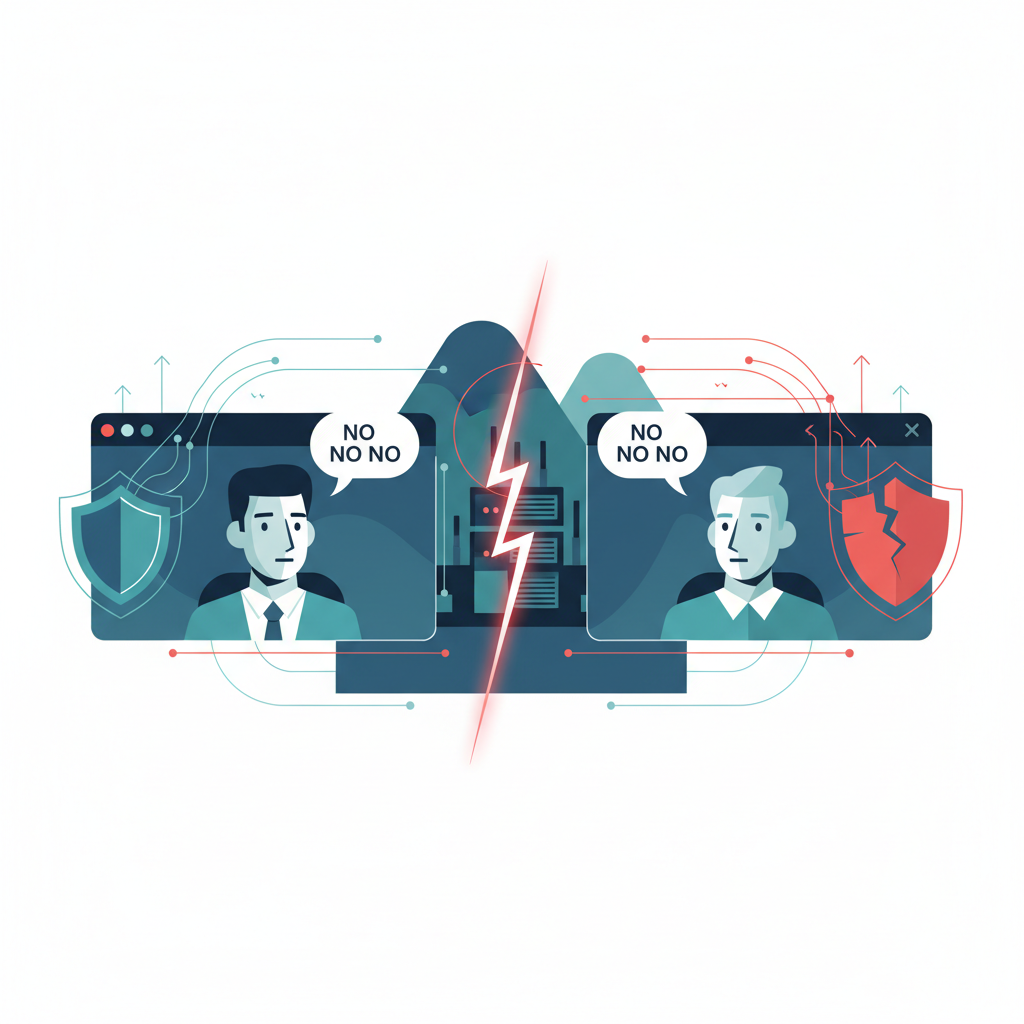
Executive Summary: Experts at Taiwan Cybersecurity Conference highlight that the greatest obstacle in multinational cybersecurity governance is not technology, but cultural and cognitive misalignment across teams, requiring deliberate alignment on risk understanding, roles, and communication to overcome interpretation gaps and differing workplace norms.
Why It Matters
At the Taiwan Cybersecurity Conference, Jesse Ku, Global Security Manager at Peregrine Pharmaceuticals, delivered a critical insight into the often-overlooked human dimension of multinational cybersecurity governance. He argued that while organizations invest heavily in technical defenses, the true barrier to effective global security operations lies not in firewalls or encryption, but in the subtle, often invisible gaps in communication and cultural interpretation across international teams. This perspective shifts focus from tool-centric security models to socio-organizational readiness, emphasizing that even the most advanced technical controls can fail if human teams cannot align on risk understanding or collaborative norms. The core issue, as Ku explained, is the 'interpretation gap'—where identical phrases or behaviors are perceived differently across cultures. His example of Asian colleagues using 'No no no' to mean 'let me add to that' being interpreted by Western peers as rejection or hostility illustrates how linguistic nuances can derail collaboration. Such misreadings are not trivial; they can lead to meeting breakdowns, stalled initiatives, and eroded trust in cross-border security efforts, especially during incident response or policy alignment where timing and clarity are critical. Beyond language, Ku highlighted divergent workplace cultures that shape how security initiatives are received and executed. U.S. teams tend to encourage open, assertive dialogue in meetings, while Taiwanese counterparts often prioritize rapid execution and efficiency, sometimes interpreting prolonged discussion as delay. European teams, by contrast, place high value on logical rigor and debate, being more willing to adapt if convinced by argument. Meanwhile, Canadian and Australian teams frequently prioritize work-life balance, making them less likely to engage in after-hours or Friday afternoon discussions—something that can clash with the urgency-driven pace common in Asian corporate environments. These differences are not merely stylistic; they directly affect how risk assessments are conducted, how policies are rolled out, and how quickly teams respond to threats. Ku also warned against the 'experience myth'—the assumption that long tenure in cybersecurity equates to current expertise. He stressed that without continuous learning, even veteran professionals may operate on outdated mental models, creating blind spots when facing evolving threats like AI-driven attacks or novel ransomware tactics. This is particularly dangerous in multinational settings where inconsistent knowledge levels across regions can lead to uneven protection and conflicting interpretations of standards like ISO 27001 versus NIST CSF. While acknowledging that generative AI has eased language barriers through real-time translation and multilingual drafting, Ku cautioned that AI cannot resolve deeper cognitive or cultural divides. In fact, overdependence on AI introduces new risks: employees may inadvertently leak sensitive data via prompts, be misled by AI-generated advice, or adversaries may weaponize the same tools to craft more convincing phishing or deepfake attacks. Thus, AI adoption must be accompanied by parallel investments in AI literacy, data governance, and threat monitoring. Ultimately, Ku framed successful global cybersecurity governance as a problem of alignment—ensuring that teams across regions share a common understanding of objectives, risk tolerance, roles, and processes. He noted that many multinational meetings fail not because of technical disagreement, but because participants mistakenly believe they are discussing the same issue while actually operating from different assumptions. Drawing from a personal anecdote about a misinterpreted gesture at a McDonald’s in freezing weather, he illustrated how even well-intentioned actions can be read as hostile when cultural context is ignored. In cybersecurity, such misalignment can mean the difference between a coordinated defense and a fragmented, ineffective response. His recommendation is not to impose a single governance model—centralized, hybrid, or decentralized—but to tailor the approach based on organizational size, cultural maturity, management capability, regional differences, and resource allocation. For global security teams, this means moving beyond compliance checklists to invest in cross-cultural training, clear R&R frameworks, and regular alignment workshops. The signal from Taiwan is clear: as multinational enterprises expand and integrate through M&A, the human layer of security—communication, trust, and shared cognition—must be treated with the same rigor as technical controls.
The important editorial point is that this is a Taiwan threat-landscape signal, not a claim that the same campaign has already become a global incident. the regional source is useful because it shows what local researchers are seeing in their own operating environment. English-language readers should treat that as first-hand regional situational awareness for local operations, subsidiaries, suppliers, managed service providers, partners, and strategic monitoring rather than as a universal incident alert.
Technical Signal
For monitoring teams, the first task is to preserve the source boundaries. The source item is titled "【臺灣資安大會直擊】專家談跨國企業資安治理:真正難的不是技術,而是跨文化協作", so the article should keep the report's local scope clear while translating the tactics, tooling, affected surfaces, and observed pattern into English. That makes the item useful without overstating victim geography or implying broader impact that the source did not document.
The practical value comes from comparison against internal telemetry. Teams with exposure in Taiwan can check whether help-desk tickets, endpoint alerts, mail gateway detections, identity anomalies, blocked downloads, command-line activity, scheduled tasks, or suspicious script execution resemble the behaviors described by the source. A match does not prove attribution, but it can justify deeper triage.
Operational Impact
This kind of regional report also helps separate durable monitoring themes from one-off news. If similar malware families, delivery chains, file types, infrastructure choices, or attacker workflows appear across later Taiwan sources, the signal becomes stronger. Nogosee should keep those links visible in the tracker so readers can see whether a local report remains isolated or becomes part of a broader pattern.
Event Type: security
Importance: medium
Affected Sectors
- cybersecurity
- enterprise security
- multinational corporations
Frequently Asked Questions
What is identified as the main challenge in global cybersecurity governance according to Jesse Ku at the Taiwan Cybersecurity Conference?
The main challenge is not technology but cultural and cognitive differences that lead to misinterpretation of communication, such as phrases like 'No no no' being seen as constructive in Asian contexts but as aggressive or dismissive in Western ones, undermining collaboration.
How do workplace cultural differences affect cybersecurity collaboration across countries, as observed by Jesse Ku?
U.S. teams favor active speaking in meetings, Taiwanese teams prioritize speed and execution, European teams value logic and debate, while Canadian and Australian teams emphasize work-life balance—these differences directly impact how security initiatives are discussed and implemented globally.
Why can overreliance on AI introduce new risks in cross-border cybersecurity efforts, according to the expert?
Overreliance on AI can lead to users being misled by AI, employees inputting confidential data into AI tools, and attackers using AI to enhance attack capabilities, meaning AI must be paired with strengthened governance and protection measures.
What does Jesse Ku recommend as the foundation for effective international cybersecurity collaboration?
The foundation is achieving 'Alignment'—ensuring shared understanding of goals, risk perception, roles and responsibilities (R&R), and operational workflows—because many multinational meetings fail not due to technology but because participants assume agreement while actually interpreting issues differently.