Answer Brief
Global security teams can monitor Japanese product vulnerabilities and supplier risk by using the JVN feed as a primary source. This guide outlines concrete steps for tracking exposure, assessing patch urgency, and managing cross-border risk without requiring numeric thresholds or fixed review cadences.
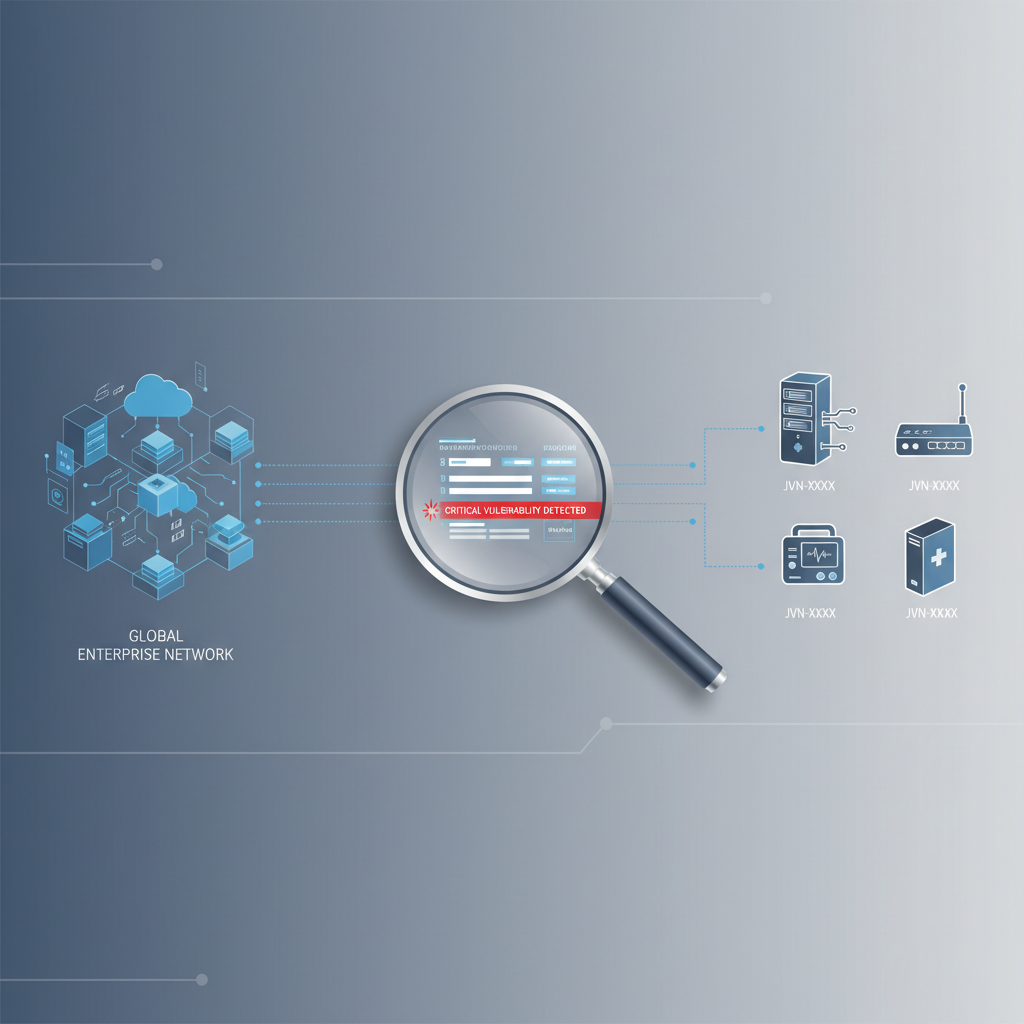
Executive Summary: Global security teams can monitor Japanese product vulnerabilities and supplier risk by using the JVN feed as a primary source. This guide outlines concrete steps for tracking exposure, assessing patch urgency, and managing cross-border risk without requiring numeric thresholds or fixed review cadences.
Why It Matters
The JVN feed serves as a critical first-hand source for monitoring vulnerabilities in Japanese technology products, offering direct insight into risks that may affect global supply chains. Unlike aggregated global feeds, JVN provides early, localized disclosure from Japanese vendors and CERT/JSOC, often before international databases reflect the same issues. This allows security teams to detect exposure to Japanese-made components in industrial control systems, medical devices, networking gear, and enterprise software — sectors where Japanese suppliers have significant market share. By tracking JVN entries, organizations can identify supplier-specific risk patterns, such as recurring flaws in ELECOM networking devices or Canon medical imaging systems, which may not be immediately visible in global vulnerability databases due to language barriers or delayed translation.
Operational use of the JVN feed requires treating it as a primary monitoring source rather than a breaking news alert. Teams should establish a routine to review new entries, focusing on the vendor name, product title, vulnerability type (e.g., stack-based buffer overflow, DLL hijacking, plaintext transmission), and any cross-references to advisories from CISA, JPCERT/CC, or vendor-specific updates. Entries like JVN#69128376 (Fujitsu Musetheque V4) or JVN#35567473 (Canon GUARDIANWALL MailSuite) illustrate how flaws in niche Japanese products can have broader implications when deployed in government, healthcare, or finance environments overseas. The presence of CISA ICS advisories mirrored in JVN (e.g., JVNVU#94687621) also signals potential relevance to operational technology environments.
Technical Signal
Decision-making should be guided by contextual factors rather than fixed thresholds. Key considerations include whether the affected product is in use, whether a patch or workaround is available, the attack complexity, and the potential impact on confidentiality, integrity, or availability. For example, the plaintext transmission flaw in KDDI’s 'あんしんフィルター for au' app (JVN#24167657) may pose low risk if the app is not deployed, but high risk if used for sensitive data handling in regulated sectors. Similarly, DLL loading issues in Bytello Share installers (JVN#98871848) require scrutiny in endpoint management workflows where third-party software is routinely deployed.
Ownership of JVN monitoring should be assigned to vulnerability management or supply-chain risk teams, with integration into existing asset and patch management processes. Rather than prescribing rigid review schedules, teams should adopt a 'recurring review' approach — checking the feed regularly and adjusting frequency based on observed volatility in Japanese vendor disclosures. Escalation should be considered when vulnerabilities affect internet-facing systems, involve privilege escalation or remote code execution, or are actively exploited in the wild, as indicated by exploit references or threat intelligence feeds.
Operational Impact
Next steps for readers include: subscribing to the JVN RSS feed (https://jvn.jp/rss/jvn.rdf), setting up keyword alerts for vendors in their supply chain, mapping JVN IDs to internal vulnerability tracking systems, and establishing liaison points with Japanese security teams or JPCERT/CC for clarification when needed. Over time, teams can build internal knowledge bases of recurring vulnerability classes in Japanese products to improve predictive risk assessment. Importantly, this approach avoids reliance on delayed or translated global feeds, enabling earlier detection of region-specific signals that may have international relevance.
Treat JVN as a monitoring input, not as proof that every feed entry deserves a public article. The practical value is a repeatable triage layer: capture the source title, original URL, visible publication date, affected product or service when available, and the operational surface involved. When those fields are thin or ambiguous, the item should stay in the tracker as monitoring data rather than becoming a standalone post.
What To Watch
For readers watching Japan, the escalation question is whether the notice touches a real local, national, regional, sector, or operating dependency. Supplier exposure, cloud identity, telecom, financial services, government systems, semiconductor or manufacturing links, public-sector technology, managed service providers, and internet-facing infrastructure are strong signals even before global media frames them as cross-border events.
A healthy workflow separates three outcomes. Routine items become searchable tracker records. Items with clear patch urgency, exploitation language, named affected technology, or cross-border supplier relevance become article candidates. Items that are old, duplicated, underspecified, or mostly vendor boilerplate should remain monitor-only even if they contain familiar cybersecurity keywords.
The useful reader task is comparison. Analysts should ask whether the same vendor, CVE family, attack surface, sector, or region appears across multiple sources. A single notice can be weak by itself, while a cluster across CERT, vendor, and security research sources can justify a higher-priority brief. Nogosee should preserve that distinction so the site behaves like an intelligence tracker instead of a rewrite feed.
Event Type: security
Importance: medium
Affected Sectors
- healthcare
- manufacturing
- technology
- telecommunications
Frequently Asked Questions
What is the JVN feed and why should global teams monitor it?
The JVN (Japan Vulnerability Notes) feed is Japan's official vulnerability disclosure service, providing timely details on flaws in Japanese-made products and services. Global teams should monitor it to identify exposure to Japanese suppliers, assess patch urgency, and manage supply-chain risk in regions where Japanese technology is embedded in critical infrastructure, healthcare, or industrial systems.
How can teams use JVN to assess supplier exposure from Japanese vendors?
Teams should regularly review JVN entries for vendor-specific advisories (JVN# or JVNVU#) linked to products in their supply chain. Focus on entries naming Japanese vendors like Fujitsu, Canon, ELECOM, or WPS, and map affected products to internal asset inventories. Prioritize vulnerabilities with public exploit details or CISA cross-references for elevated risk.
What workflow steps should follow when a relevant JVN vulnerability is identified?
Upon identifying a relevant JVN entry, teams should: verify affected product versions in use, check for vendor patches or mitigations, assess exploitability and exposure scope, notify asset owners, and track remediation status. Escalate to senior management if the vulnerability affects critical systems, has active exploit code, or lacks vendor fixes after reasonable disclosure time.