Answer Brief
This practical workflow guides security teams in creating a concise, actionable weekly executive brief from the Nogosee East Asia Cyber & AI Risk Tracker. It outlines signal selection, regional and sector grouping, writing standards, ownership, escalation triggers, and next steps—without requiring breaking news or U.S.-centric impact.
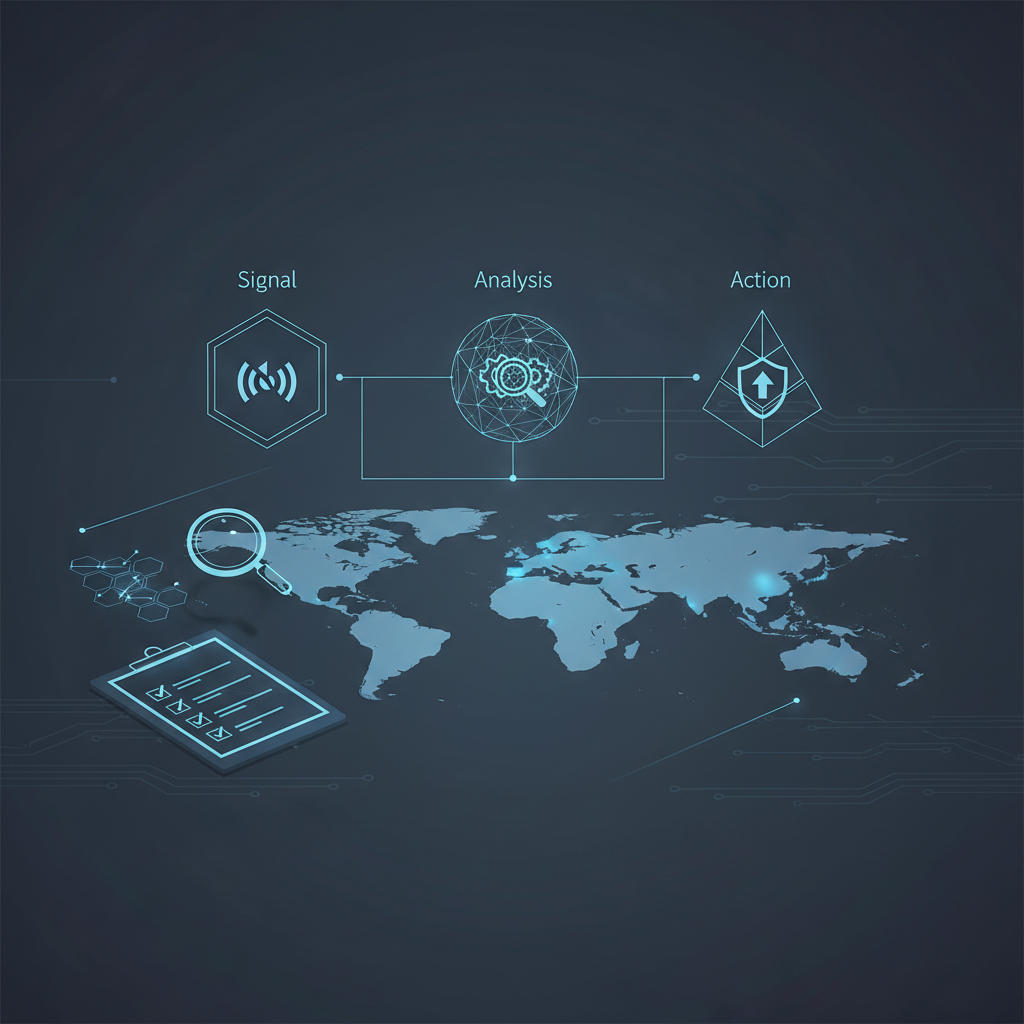
Executive Summary: This practical workflow guides security teams in creating a concise, actionable weekly executive brief from the Nogosee East Asia Cyber & AI Risk Tracker. It outlines signal selection, regional and sector grouping, writing standards, ownership, escalation triggers, and next steps—without requiring breaking news or U.S.-centric impact.
Why It Matters
Creating a weekly executive brief from the Nogosee East Asia Cyber & AI Risk Tracker requires a disciplined workflow focused on signal quality, regional relevance, and executive usability. The tracker’s core focus on Taiwan, Japan, and Korea ensures access to first-hand local intelligence, which holds international value due to its early warning potential. Signals from these regions should be prioritized when they originate from CERTs, government security agencies, or reputable research teams reporting on incidents, vulnerabilities, TTPs, or policy developments. Selected watchlist items from China, Singapore, Philippines, and Thailand may be included only if they contain original reporting with clear cyber, AI, cloud, or infrastructure risk implications—never assumed impact.
Signals must be grouped logically to support rapid comprehension. Organize by region first (Taiwan, Japan, Korea, then watchlist areas), then by sector: cybersecurity incidents, AI infrastructure risks, cloud security events, identity and governance issues, and critical infrastructure threats. Within each group, sort by importance (High, Medium, Low) and recency. Avoid mixing event types or including low-value monitoring records that lack actionable context. Each entry should include a concise headline, one-sentence summary, source link, and clear indication of affected sectors or entities—without speculation.
Technical Signal
The brief must be action-oriented. For each signal, include a ‘What to watch’ or ‘Next step’ line that directs executives or teams to monitor for specific behaviors, such as similar TTPs in supply chains, patching timelines for named vulnerabilities, or policy shifts in AI governance. These next steps should be general and observable, not prescriptive or tied to unverified claims. Avoid implying urgency unless the source explicitly describes active exploitation, confirmed disruption, or spreading incidents.
Ownership and review are critical to consistency. Assign one analyst per week to draft the brief using the Nogosee tracker’s filtered views and saved queries. A team lead or SOC manager should review the draft before publication to ensure tone, clarity, and adherence to Nogosee’s editorial principles—particularly the avoidance of forced U.S. impact narratives and overclaiming. Establish an escalation threshold: if a signal shows evidence of active exploitation, regional propagation, or impact on essential services (e.g., energy, telecom, finance), it should trigger immediate stakeholder notification outside the weekly cycle.
Operational Impact
Finally, treat the brief as a living process. Archive each edition with its source links and tracking query for reproducibility. After distribution, solicit feedback from executive readers on usefulness, length, and clarity—then refine the signal selection and formatting accordingly. Maintain the Nogosee RSS and CSV exports as standing monitoring tools, and revisit enabled sources periodically to ensure coverage aligns with regional risk priorities. This workflow turns the tracker into a sustainable intelligence engine for East Asia-facing cyber and AI risk teams.
Treat the official source as a monitoring input, not as proof that every feed entry deserves a public article. The practical value is a repeatable triage layer: capture the source title, original URL, visible publication date, affected product or service when available, and the operational surface involved. When those fields are thin or ambiguous, the item should stay in the tracker as monitoring data rather than becoming a standalone post.
What To Watch
For readers watching East Asia, the escalation question is whether the notice touches a real local, national, regional, sector, or operating dependency. Supplier exposure, cloud identity, telecom, financial services, government systems, semiconductor or manufacturing links, public-sector technology, managed service providers, and internet-facing infrastructure are strong signals even before global media frames them as cross-border events.
A healthy workflow separates three outcomes. Routine items become searchable tracker records. Items with clear patch urgency, exploitation language, named affected technology, or cross-border supplier relevance become article candidates. Items that are old, duplicated, underspecified, or mostly vendor boilerplate should remain monitor-only even if they contain familiar cybersecurity keywords.
The useful reader task is comparison. Analysts should ask whether the same vendor, CVE family, attack surface, sector, or region appears across multiple sources. A single notice can be weak by itself, while a cluster across CERT, vendor, and security research sources can justify a higher-priority brief. Nogosee should preserve that distinction so the site behaves like an intelligence tracker instead of a rewrite feed.
Event Type: security
Importance: medium
Affected Sectors
- AI risk
- cloud security
- cybersecurity
- governance
Frequently Asked Questions
What sources should be prioritized when building a weekly East Asia cyber risk brief?
Prioritize first-hand signals from Taiwan, Japan, and Korea CERTs, government agencies, and reputable security research. Include selected watchlist items from China, Singapore, Philippines, and Thailand only if they contain original reporting on cyber, AI, cloud, or infrastructure risk with clear regional relevance.
How should signals be grouped in the executive brief for maximum clarity?
Group signals by region (Taiwan, Japan, Korea, then watchlist areas) and sector (cybersecurity, AI infrastructure, cloud, identity, critical infrastructure). Avoid mixing unrelated event types; use consistent formatting to enable quick scanning by executives.
What makes a signal suitable for inclusion in an executive brief versus monitoring only?
Include signals with clear operational relevance: observed TTPs, affected sectors, actionable indicators, or policy shifts. Exclude low-value noise, generic advisories without context, or speculative claims. Monitor-only items remain in the tracker but do not appear in the brief.
Who should own the creation and review of the weekly brief, and when should it be escalated?
Assign a dedicated analyst to draft the brief using Nogosee’s filtered views. A team lead or SOC manager should review for actionability and tone. Escalate if a signal shows active exploitation, regional spread, or impacts critical infrastructure—triggering immediate stakeholder alert.
What are the key next steps after publishing the weekly brief?
Archive the brief with source links, update the tracking query for recurrence, and gather feedback from executives on clarity and utility. Use feedback to refine signal selection and formatting. Maintain the RSS/CSV export as a standing resource for ongoing monitoring.