Answer Brief
Use Nogosee's East Asia Cyber & AI Risk Tracker to convert CERT, vulnerability, and security records into SOC tickets only when they meet clear ownership, exposure, urgency, and actionability criteria, reducing alert fatigue through structured triage.
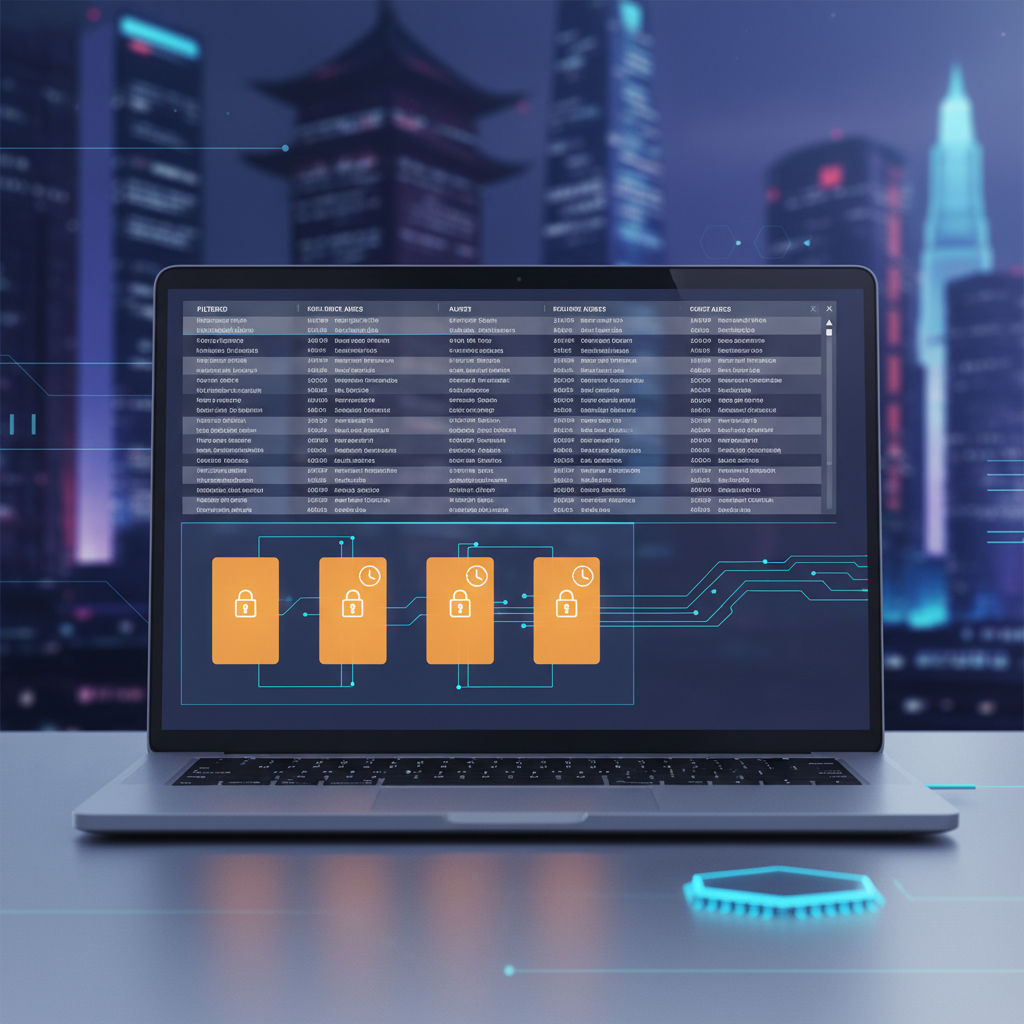
Executive Summary: Use Nogosee's East Asia Cyber & AI Risk Tracker to convert CERT, vulnerability, and security records into SOC tickets only when they meet clear ownership, exposure, urgency, and actionability criteria, reducing alert fatigue through structured triage.
Why It Matters
This workflow addresses a persistent challenge in security operations: converting regional threat intelligence into actionable SOC tickets without overwhelming teams with alert noise. Nogosee’s East Asia Cyber & AI Risk Tracker serves as the source context, normalizing CERT, vulnerability, and security records from Taiwan, Japan, Korea, and selected watchlist regions into structured signals enriched with entities, sectors, tags, and operational metadata. The core insight is that not every published advisory or feed item warrants a SOC ticket—many lack the contextual clarity needed for effective response. The workflow establishes four non-negotiable criteria for ticket creation: clear ownership (a specific team or system accountable), confirmed exposure (the affected asset exists in the organization’s inventory), urgency (evidence of active exploitation or imminent threat), and actionability (a defined, feasible remediation step). Only when all four are satisfied should a ticket be generated. This approach prevents the common pitfall of treating every CERT alert as equally urgent, which dilutes focus and increases burnout. Ownership is assigned to the SOC analyst or threat intelligence lead for initial triage, using Nogosee’s tracker as the primary source. If any criterion is missing—such as when an advisory references a vulnerability without specifying affected systems or lacks exploit evidence—the item becomes a monitoring record, not a ticket. It is retained in a watchlist for re-evaluation when new context emerges, such as internal asset discovery or updated threat intelligence. Escalation to asset owners or incident response teams occurs strictly after all four criteria are met, ensuring handoffs are based on validated risk, not speculation. The workflow deliberately avoids numeric claims, deadlines, or review cadences because the source context does not provide them; instead, it emphasizes repeatable, principle-based decision-making. By anchoring triage in observable, verifiable conditions rather than arbitrary thresholds, the method adapts to varying signal volumes and source qualities across East Asia. Readers should monitor for updates to Nogosee’s tracker methodology and source coverage, as improvements in signal normalization may affect triage accuracy over time. The ultimate goal is not to eliminate alerts but to elevate the signal-to-noise ratio, ensuring SOC resources are directed only toward threats that can be owned, verified, acted upon, and timed effectively.
Treat the official source as a monitoring input, not as proof that every feed entry deserves a public article. The practical value is a repeatable triage layer: capture the source title, original URL, visible publication date, affected product or service when available, and the operational surface involved. When those fields are thin or ambiguous, the item should stay in the tracker as monitoring data rather than becoming a standalone post.
Technical Signal
For readers watching East Asia, the escalation question is whether the notice touches a real local, national, regional, sector, or operating dependency. Supplier exposure, cloud identity, telecom, financial services, government systems, semiconductor or manufacturing links, public-sector technology, managed service providers, and internet-facing infrastructure are strong signals even before global media frames them as cross-border events.
A healthy workflow separates three outcomes. Routine items become searchable tracker records. Items with clear patch urgency, exploitation language, named affected technology, or cross-border supplier relevance become article candidates. Items that are old, duplicated, underspecified, or mostly vendor boilerplate should remain monitor-only even if they contain familiar cybersecurity keywords.
Operational Impact
The useful reader task is comparison. Analysts should ask whether the same vendor, CVE family, attack surface, sector, or region appears across multiple sources. A single notice can be weak by itself, while a cluster across CERT, vendor, and security research sources can justify a higher-priority brief. Nogosee should preserve that distinction so the site behaves like an intelligence tracker instead of a rewrite feed.
For structured coverage, tag each record consistently by region, source, sector, technology surface, and monitoring status. That makes the database useful even on quiet news days because readers can still filter for security operations, cybersecurity, cloud security, government, inspect current watchlist records, and decide which official source deserves direct follow-up.
What To Watch
Readers should use the official source link as the authority for current advisories. Nogosee's role is to translate and organize the signal, explain why it may matter to cyber, AI, cloud, and operations teams, and show when a local East Asia item becomes relevant to global operators. It should not replace incident-response guidance, vendor documentation, or primary CERT instructions.
Event Type: security
Importance: medium
Affected Sectors
- cloud security
- cybersecurity
- government
- security operations
Frequently Asked Questions
How do I determine if an East Asia CERT alert should become a SOC ticket?
Apply four criteria: clear ownership (assigned team or system), confirmed exposure (asset in inventory), urgency (active exploitation or imminent threat), and actionability (specific remediation step possible). Only create a ticket if all four are met.
What should I do if an East Asia CERT alert lacks ownership or exposure details?
Treat it as a monitoring record, not a ticket. Add it to a watchlist for periodic review when new context emerges (e.g., asset discovery, threat intel updates). Do not escalate or assign until criteria are satisfied.
Who owns the triage decision for East Asia CERT feeds in this workflow?
The SOC analyst or threat intelligence lead owns initial triage using Nogosee’s tracker. Escalation to asset owners or incident response occurs only after all four criteria (ownership, exposure, urgency, actionability) are confirmed.
How does this workflow reduce alert fatigue in SOC teams?
By filtering out low-value CERT records that lack actionable context, the workflow ensures SOC tickets are created only for signals requiring immediate response, reducing noise and focusing analyst effort on high-fidelity threats.
Can I use this workflow for non-East Asia CERT feeds?
Yes, the same four-criteria framework (ownership, exposure, urgency, actionability) applies globally. However, Nogosee’s tracker is optimized for East Asia sources, so external feeds may require additional normalization steps.