Answer Brief
This tutorial explains how to use CVSS vectors from JVN advisories to prioritize vulnerability verification by interpreting exploitability, impact, and deployment context. It provides actionable steps for security teams to triage JVN entries efficiently without relying on numeric scores alone.
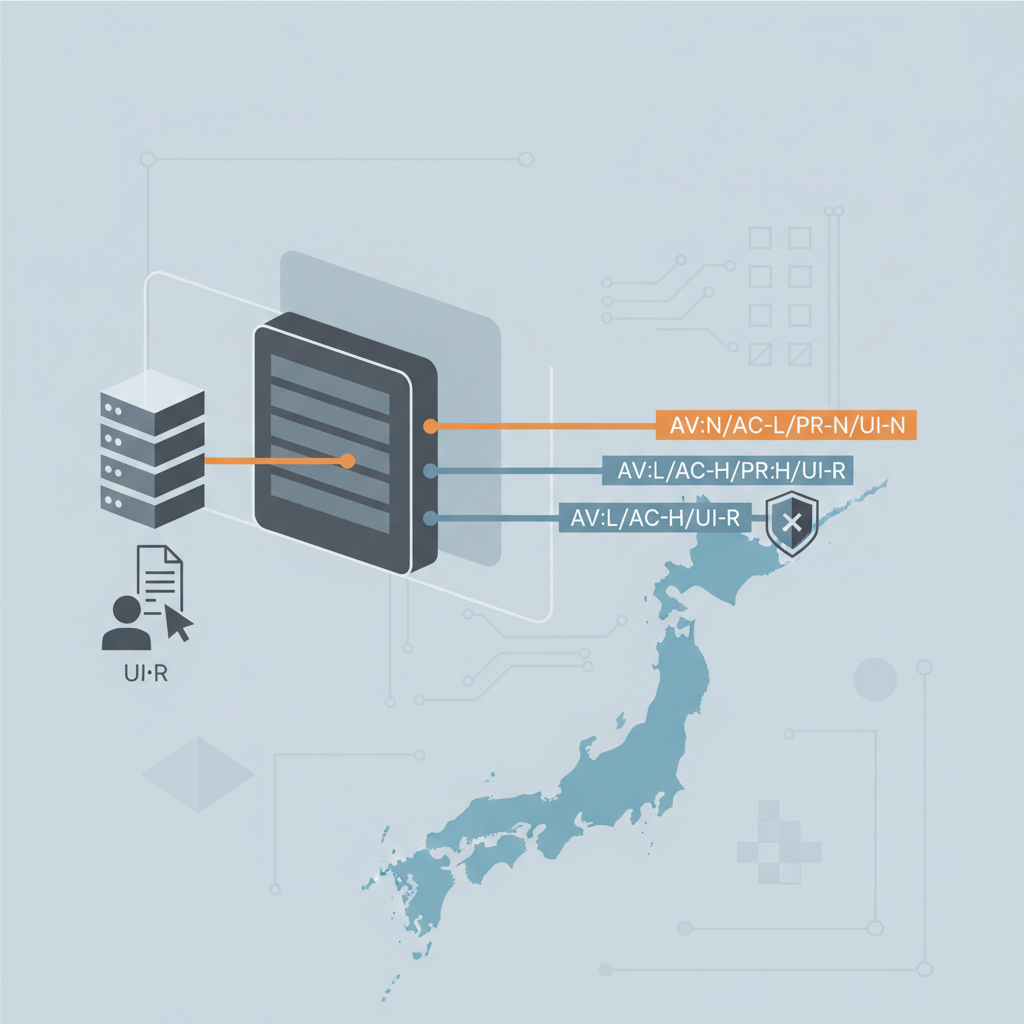
Executive Summary: This tutorial explains how to use CVSS vectors from JVN advisories to prioritize vulnerability verification by interpreting exploitability, impact, and deployment context. It provides actionable steps for security teams to triage JVN entries efficiently without relying on numeric scores alone.
Why It Matters
The JVN feed provides structured vulnerability data including CVSS vectors that enable pragmatic triage without relying solely on base scores. Each entry includes a vector string (e.g., AV:N/AC:L/PR:N/UI:N/S/U/C:H/I:H/A:H) that breaks down exploitability and impact dimensions. Security teams should treat these vectors as diagnostic tools: Attack Vector (AV) reveals whether the flaw is reachable via network (N), adjacent (A), or local (L) access; Attack Complexity (AC) indicates if exploitation requires special conditions (H) or is straightforward (L); Privileges Required (PR) shows if admin rights (H), user rights (L), or none (N) are needed; and User Interaction (UI) determines if exploitation depends on user action (R) or can occur automatically (N). By mapping these to deployment realities—such as whether a system is internet-facing, segmented, or requires authentication—teams can infer exploit likelihood beyond what a numeric score implies. For example, a vulnerability with AV:N/AC:L/PR:L/UI:R may score moderately but poses less immediate risk than one with AV:N/AC:L/PR:N/UI:N in an exposed web server, because the latter requires no privileges or user action. The tutorial emphasizes verifying exploitability conditions first: confirm network exposure, check for default or weak credentials, test interaction points, and validate whether mitigations like WAF rules or network segmentation are effectively in place. Ownership should fall to vulnerability management or asset owners, who coordinate with system administrators to validate findings. Escalation occurs when vector metrics indicate high exploitability and the asset is critical, internet-facing, or lacks compensating controls—triggering deeper analysis or patch prioritization. Importantly, the guidance avoids numeric thresholds or rigid rules, instead advocating for contextual review: a ‘medium’ CVSS score with AV:N/AC:L/PR:N/UI:N may warrant higher priority than a ‘high’ score requiring local access and privileges. Next steps include maintaining a watchlist of JVN entries with network-reachable, low-complexity vectors, correlating them with internal asset inventories, and scheduling verification based on changing exposure—such as new cloud deployments or firewall rule updates—rather than fixed cadences. This approach turns JVN’s structured data into a dynamic, context-aware verification workflow that aligns with actual risk rather than abstract severity.
Treat JVN as a monitoring input, not as proof that every feed entry deserves a public article. The practical value is a repeatable triage layer: capture the source title, original URL, visible publication date, affected product or service when available, and the operational surface involved. When those fields are thin or ambiguous, the item should stay in the tracker as monitoring data rather than becoming a standalone post.
Technical Signal
For readers watching Japan, the escalation question is whether the notice touches a real local, national, regional, sector, or operating dependency. Supplier exposure, cloud identity, telecom, financial services, government systems, semiconductor or manufacturing links, public-sector technology, managed service providers, and internet-facing infrastructure are strong signals even before global media frames them as cross-border events.
A healthy workflow separates three outcomes. Routine items become searchable tracker records. Items with clear patch urgency, exploitation language, named affected technology, or cross-border supplier relevance become article candidates. Items that are old, duplicated, underspecified, or mostly vendor boilerplate should remain monitor-only even if they contain familiar cybersecurity keywords.
Operational Impact
The useful reader task is comparison. Analysts should ask whether the same vendor, CVE family, attack surface, sector, or region appears across multiple sources. A single notice can be weak by itself, while a cluster across CERT, vendor, and security research sources can justify a higher-priority brief. Nogosee should preserve that distinction so the site behaves like an intelligence tracker instead of a rewrite feed.
For structured coverage, tag each record consistently by region, source, sector, technology surface, and monitoring status. That makes the database useful even on quiet news days because readers can still filter for government, technology, critical infrastructure, inspect current watchlist records, and decide which official source deserves direct follow-up.
What To Watch
Readers should use the official source link as the authority for current advisories. Nogosee's role is to translate and organize the signal, explain why it may matter to cyber, AI, cloud, and operations teams, and show when a local Japan item becomes relevant to global operators. It should not replace incident-response guidance, vendor documentation, or primary CERT instructions.
Event Type: security
Importance: medium
Affected Sectors
- critical infrastructure
- government
- technology
Frequently Asked Questions
What does a CVSS vector from JVN tell me about exploitability?
The CVSS vector’s exploitability metrics (Attack Vector, Attack Complexity, Privileges Required, User Interaction) indicate how easily a vulnerability can be exploited. For example, AV:N/AC:L/PR:N/UI:R suggests network exposure, low complexity, no privileges needed, but user interaction required—helping prioritize verification based on real-world exploit likelihood.
When should I de-prioritize verifying a JVN-listed vulnerability based on its CVSS vector?
De-prioritize verification if the vector shows high attack complexity (AC:H), requires privileges (PR:H), demands user interaction (UI:R), or is limited to adjacent or local network access (AV:A/AV:L), especially if no compensating controls are missing and the affected asset is isolated or not internet-facing.
How do I use JVN CVSS vectors to decide what to verify first in my environment?
Start by filtering JVN entries for AV:N (network) and AC:L (low complexity). Then check PR:N (no privileges) and UI:N (no user interaction) for highest priority. Verify these first in internet-facing systems. Use asset context—like exposure, criticality, and compensating controls—to refine the order before allocating verification resources.