Answer Brief
A practical guide for global security, cloud, and operations teams to monitor TWCERT/CC’s Taiwan Vulnerability Notes (TVN) feed for early detection of supply-chain risks affecting Taiwan-based software, vendors, and infrastructure. Focuses on actionable workflow steps, ownership, and flexible review practices without implying timeliness or numerical thresholds.
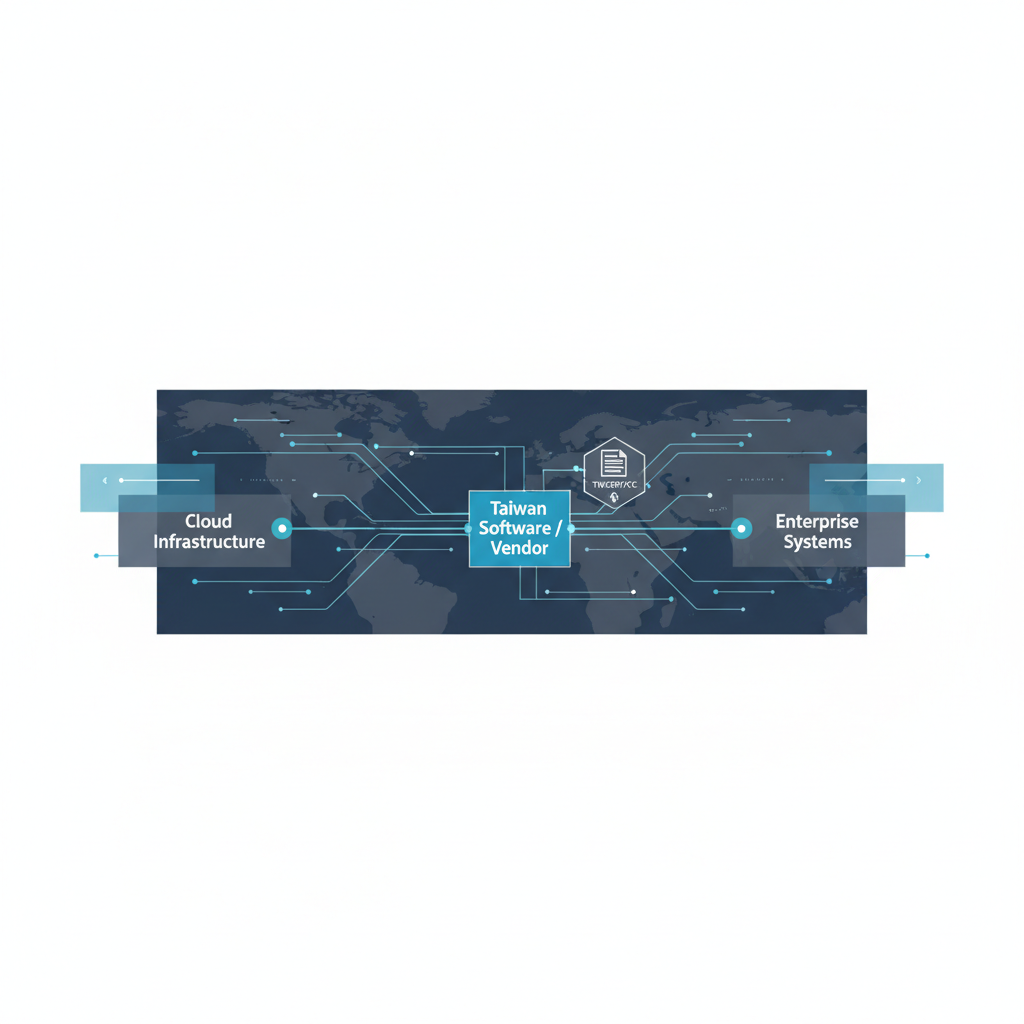
Executive Summary: A practical guide for global security, cloud, and operations teams to monitor TWCERT/CC’s Taiwan Vulnerability Notes (TVN) feed for early detection of supply-chain risks affecting Taiwan-based software, vendors, and infrastructure. Focuses on actionable workflow steps, ownership, and flexible review practices without implying timeliness or numerical thresholds.
Why It Matters
The TWCERT/CC TVN feed serves as a first-hand regional signal for tracking vulnerabilities impacting Taiwan-based software, hardware, and vendor ecosystems. While not all TVN entries imply immediate global risk, they offer early visibility into components that may be embedded in global supply chains — particularly in technology manufacturing, industrial control systems, and cloud-adjacent infrastructure where Taiwan plays a significant role. Monitoring this feed is not about reacting to every entry but about establishing a disciplined process to detect potential exposure points before they become widespread issues.
Global security, cloud, and operations teams should treat the TVN feed as a passive monitoring source rather than a breaking news stream. The goal is not to act on every vulnerability note but to build awareness of Taiwan-linked components that appear in vulnerability disclosures over time. This requires integrating TVN monitoring into existing vulnerability management or third-party risk workflows, where entries are checked against internal asset inventories, software bills of materials (SBOMs), or vendor lists.
Technical Signal
Ownership of this monitoring activity should be clearly defined but not siloed. Ideal owners include vulnerability management analysts, supply-chain security leads, or cloud security engineers who already oversee third-party risk or open-source software (OSS) tracking. Their role is to scan for relevant entries, validate matches against internal dependencies, and flag items requiring deeper investigation — not to unilaterally decide on patches or mitigations.
Decision criteria for relevance should focus on technical overlap: Does the TVN entry mention a software library, firmware component, or hardware device that the organization uses or procures? Teams should avoid relying on vague descriptors like "Taiwan-made" and instead map disclosures to specific product names, versions, or identifiers found in procurement logs or development pipelines. If a match is found, the next step is to assess whether a fix is available, whether compensating controls exist, and whether the component is exposed to external networks.
Operational Impact
Escalation should be triggered not by time-based rules but by the presence of confirmed exposure and unresolved risk. If a matching component lacks a patch, upgrade path, or vendor mitigation — and if it is internet-facing or part of a critical workflow — the finding should be routed to the appropriate response team for further analysis. The threshold for escalation is technical confirmation of risk, not a count of entries or elapsed time since publication.
Finally, teams must avoid common pitfalls: treating the feed as urgent, applying rigid review schedules, or inferring exploitability from publication alone. The TVN feed is a signal source, not a threat intelligence feed with guaranteed actionability. Its value lies in pattern recognition over time — helping teams understand which Taiwan-linked components repeatedly appear in vulnerability disclosures, which may warrant longer-term supplier evaluation or architectural review.
What To Watch
Treat TWCERT/CC as a monitoring input, not as proof that every feed entry deserves a public article. The practical value is a repeatable triage layer: capture the source title, original URL, visible publication date, affected product or service when available, and the operational surface involved. When those fields are thin or ambiguous, the item should stay in the tracker as monitoring data rather than becoming a standalone post.
For readers watching Taiwan, the escalation question is whether the notice touches a real local, national, regional, sector, or operating dependency. Supplier exposure, cloud identity, telecom, financial services, government systems, semiconductor or manufacturing links, public-sector technology, managed service providers, and internet-facing infrastructure are strong signals even before global media frames them as cross-border events.
A healthy workflow separates three outcomes. Routine items become searchable tracker records. Items with clear patch urgency, exploitation language, named affected technology, or cross-border supplier relevance become article candidates. Items that are old, duplicated, underspecified, or mostly vendor boilerplate should remain monitor-only even if they contain familiar cybersecurity keywords.
The useful reader task is comparison. Analysts should ask whether the same vendor, CVE family, attack surface, sector, or region appears across multiple sources. A single notice can be weak by itself, while a cluster across CERT, vendor, and security research sources can justify a higher-priority brief. Nogosee should preserve that distinction so the site behaves like an intelligence tracker instead of a rewrite feed.
Event Type: supply_chain
Importance: medium
Affected Sectors
- critical infrastructure
- government
- supply chain
- technology
Frequently Asked Questions
What is the TWCERT/CC TVN feed and why should global teams monitor it?
The TWCERT/CC Taiwan Vulnerability Notes (TVN) feed publishes vulnerability disclosures affecting Taiwan-based software, vendors, and systems. Global teams should monitor it to detect early signs of supply-chain exposure in Taiwan-linked components, especially when those components are embedded in global cloud, enterprise, or critical infrastructure stacks.
Who should own the monitoring of the TWCERT/CC TVN feed within an organization?
Ownership should be assigned to a cross-functional role such as a supply-chain security analyst, vulnerability management lead, or cloud security operations engineer. The owner is responsible for initiating reviews, triaging relevance, and escalating findings — but not for making final remediation decisions alone.
How should teams determine if a TVN entry is relevant to their environment?
Relevance is determined by matching affected software, libraries, or hardware components in the TVN entry against the organization’s asset inventory, SBOMs, or third-party dependency lists. Focus on components with known usage in Taiwan-developed or Taiwan-sourced products, even if deployed globally.
What is the recommended escalation path when a potentially relevant TVN entry is identified?
If a TVN entry matches a known dependency and lacks a patch or mitigation, the owner should route it for review to the vulnerability management or incident response team. Escalation should occur when technical confirmation of exposure is possible and business impact cannot be ruled out — not based on arbitrary timeframes.
What workflow practices should teams avoid when using the TWCERT/CC TVN feed for monitoring?
Teams should avoid treating the feed as a real-time alert source, applying fixed review cadences (e.g., daily or weekly), using numeric thresholds for action, or assuming all entries imply active exploitation. Instead, use flexible, context-driven review language and treat each entry as a signal requiring validation, not an automatic trigger.