Answer Brief
Governance, risk, and AI platform teams can use Nogosee’s East Asia Cyber & AI Risk Tracker to build a structured watchlist by searching, inspecting, and exporting signals related to AI security, model risk, identity, data, and cloud infrastructure across Taiwan, Japan, Korea, and selected Southeast Asian regions.
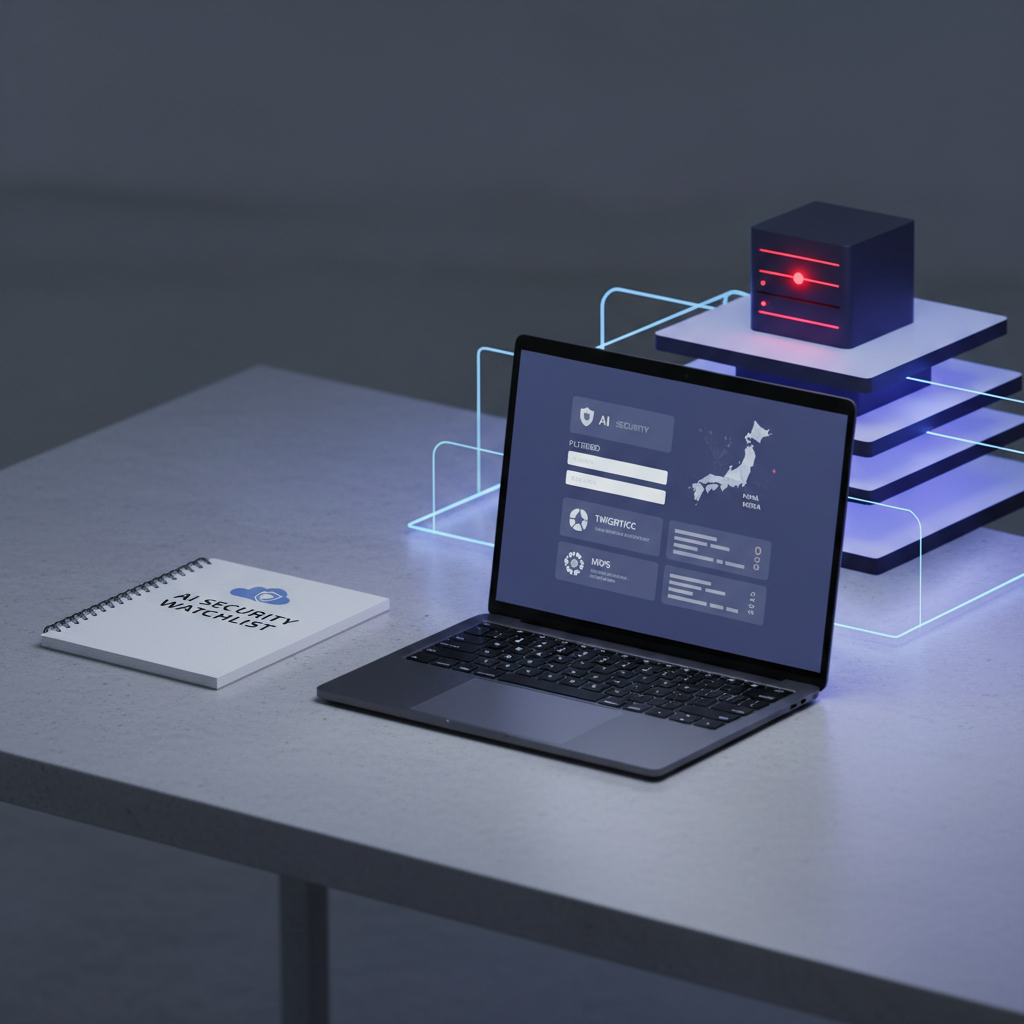
Executive Summary: Governance, risk, and AI platform teams can use Nogosee’s East Asia Cyber & AI Risk Tracker to build a structured watchlist by searching, inspecting, and exporting signals related to AI security, model risk, identity, data, and cloud infrastructure across Taiwan, Japan, Korea, and selected Southeast Asian regions.
Why It Matters
Governance, risk, and AI platform teams responsible for overseeing AI systems in East Asia face challenges in tracking fragmented, language-specific, and rapidly evolving cyber and AI risk signals. Nogosee’s East Asia Cyber & AI Risk Tracker provides a structured, English-accessible layer for monitoring public records from official sources such as TWCERT/CC, JVN, KrCERT, MOPS disclosures, and government procurement feeds across Taiwan, Japan, Korea, and selected watchlist regions including China, Singapore, Philippines, and Thailand. This tracker functions not as a real-time alert feed but as a curated, searchable database of structured signals that supports deliberate workflow use—particularly for governance teams building and maintaining an AI security watchlist.
The first step in building such a watchlist is to initiate a targeted search using the tracker’s query interface. Teams should begin with broad but relevant themes like 'AI security', 'model risk', 'AI governance', or 'data integrity', then refine results using region-specific filters (e.g., Taiwan, Japan, Korea) or source families such as national CERTs or government disclosure systems. The tracker allows filtering by event type, sector, tag, and publication window, enabling teams to isolate signals related to AI model misuse, infrastructure vulnerabilities in AI pipelines, or identity risks in cloud-deployed systems. This search phase is not about capturing every signal but about identifying those with potential operational relevance to AI system oversight.
Technical Signal
Once search results return, the next phase involves inspecting individual signals to assess their validity and urgency. Teams should open the source-linked record to verify the original language, publication date, and issuing authority—such as a TWCERT/CC advisory or a MOPS disclosure from a Taiwan-listed company. Checking the signal’s metadata, including assigned sector (e.g., Cloud Security, Identity & Governance), tags (e.g., ai-security, model-risk), and importance rating (High, Medium, Monitoring), helps prioritize review. The tracker also provides access to related collection pages, which can reveal clustering of similar signals over time or across sectors, aiding in trend recognition without relying on real-time alerts.
After inspection, teams must decide how to handle each signal: retain it in monitoring, export it for internal use, or escalate it for deeper review. The Nogosee workflow guidance recommends keeping signals in monitoring when they are relevant but not immediately actionable, with a plan to re-check when related signals emerge in the same region, sector, or threat theme (e.g., repeated incidents involving model inversion attacks or cloud credential exposure in AI training pipelines). Export options include capped CSV for lightweight sharing, indicator CSV for IOC integration, RSS for feed-based monitoring, or copyable briefs for team distribution. These exports support repeatable use in governance meetings, risk assessments, or supplier reviews.
Operational Impact
For signals requiring broader historical context or real-time updates beyond the tracker’s public caps, teams should use the official request form to access full feeds, custom monitoring, or API-based exports. This step is essential for teams needing continuous feed integration into SIEM, GRC, or MLOps platforms. Importantly, Nogosee does not publish private query logic or methodology details, so teams must independently verify signal provenance by cross-referencing the original source, checking update cadences, and reviewing any published methodology from the source family (e.g., JVN’s vulnerability disclosure timeline).
Throughout this process, governance teams should avoid treating the tracker as a source of ground truth or real-time threat intelligence. Instead, it serves as a monitoring layer—a starting point for due diligence. The tracker’s value lies in its aggregation of otherwise hard-to-access East Asian public signals into a consistent, English-language format, reducing the burden of language translation and source fragmentation. By following this workflow—search, inspect, export or monitor, verify, and request deeper access when needed—teams can build a dynamic, source-grounded AI security watchlist that supports proactive governance without overreliance on unverified or speculative intelligence.
What To Watch
Treat the official source as a monitoring input, not as proof that every feed entry deserves a public article. The practical value is a repeatable triage layer: capture the source title, original URL, visible publication date, affected product or service when available, and the operational surface involved. When those fields are thin or ambiguous, the item should stay in the tracker as monitoring data rather than becoming a standalone post.
Event Type: security
Importance: medium
Affected Sectors
- AI Security
- Cloud Security
- Governance
- Identity & Governance
- Security Operations
Frequently Asked Questions
How do I start building an East Asia AI security watchlist using Nogosee?
Begin by searching the Nogosee tracker using AI security, model risk, or related threat themes such as 'AI governance', 'data poisoning', or 'model theft'. Use country, sector, or source family filters to narrow results to East Asia signals before inspecting individual records.
What should I look for when inspecting signals for my watchlist?
Open source-linked records to verify context, check publication dates and source families (e.g., TWCERT/CC, JVN, KrCERT), and assess operational relevance. Use related collection pages to understand trends before deciding whether to monitor, export, or escalate a signal.
How can governance teams use exported signals from Nogosee for ongoing monitoring?
Export signals as capped CSV, indicator CSV, or RSS feeds for integration into internal watchlists or SIEM tools. Use these exports for repeatable workflows, and request full feeds or custom monitoring via the tracker’s access form when broader historical or real-time data is needed.