Answer Brief
A practical guide for global security teams to monitor JPCERT/CC alerts as a first-hand source of Japanese cyber risk signals, including vulnerability advisories, weekly reports, and infrastructure exposure relevant to enterprise security operations.
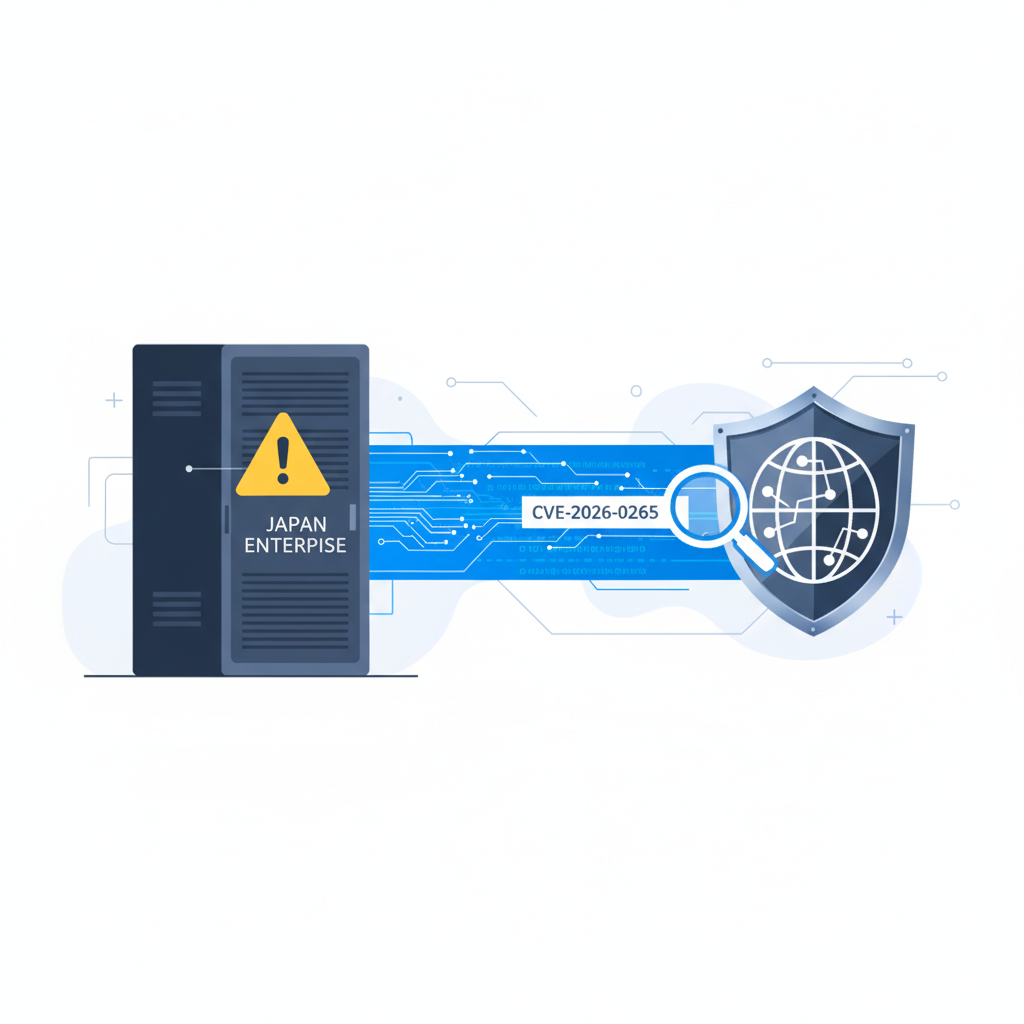
Executive Summary: A practical guide for global security teams to monitor JPCERT/CC alerts as a first-hand source of Japanese cyber risk signals, including vulnerability advisories, weekly reports, and infrastructure exposure relevant to enterprise security operations.
Why It Matters
Monitoring JPCERT/CC alerts provides global security teams with a critical window into cyber risk signals originating from Japan’s enterprise and infrastructure environments. As Japan’s national CERT, JPCERT/CC issues timely vulnerability advisories and weekly reports that reflect real-time threat activity, exploit patterns, and vendor response timelines relevant to technologies widely deployed in multinational operations. The feed includes advisories for high-impact products such as Palo Alto Networks PAN-OS (CVE-2026-0265), Trend Micro Apex One, Cisco ASA and FTD, Microsoft security updates, Adobe Acrobat, and GUARDIANWALL MailSuite, each accompanied by public links to detailed technical descriptions. These alerts are not limited to Japan-specific issues but often cover global software stacks, making them valuable for early warning.
The Weekly Reports section of the feed aggregates vulnerability disclosures across a broad range of enterprise and consumer technologies, including Linux kernel local privilege escalation flaws, NGINX heap-based buffer overflows, MongoDB out-of-bounds writes, VMware Fusion privilege escalation, and widespread flaws in GitLab, pgAdmin, and Apple products. Additionally, reports cover niche but critical infrastructure devices such as Elecom wireless LAN routers and access points, highlighting risks in edge networking gear frequently used in distributed enterprises. The inclusion of periodic reports like the "Internet Point Observation Report" and "TSUBAME Report Overflow" adds strategic context on long-term threat trends and malware behavior observed in Japanese networks.
Technical Signal
For security operations teams, the JPCERT/CC feed should be integrated into routine vulnerability monitoring workflows as a trusted, authoritative source. Unlike social media or unverified threat intelligence feeds, JPCERT/CC advisories are formally vetted and issued under clear public authority, reducing noise and increasing signal reliability. Teams should establish processes to parse the RSS feed regularly, map alerted CVEs and product names to internal asset databases, and assess applicability based on version exposure and network presence.
Decision criteria for action should include confirmation of affected technology in use, assessment of exploit availability (public exploit code, active exploitation reports), and evaluation of compensating controls. There are no fixed thresholds for escalation; instead, teams should use flexible review language—such as considering escalation when exploitation is likely or when patch availability is delayed—and route items for further review when details are unclear or when the alert involves critical infrastructure components.
Operational Impact
Ownership of this monitoring function typically falls to vulnerability management, threat intelligence, or SOC teams, with clear handoffs to patch management or incident response when actionable risk is identified. Next steps include validating patch applicability, checking for intrusion indicators in logs related to the vulnerability, and documenting mitigation status. Teams should also consider correlating JPCERT/CC signals with other regional CERT feeds (e.g., KrCERT, TWCERT/CC) to build a broader East Asia risk picture.
It is important to note that the absence of an alert in the JPCERT/CC feed does not imply absence of risk; teams must maintain layered monitoring. However, the presence of an alert—especially for widely used enterprise software—should trigger timely review due to JPCERT/CC’s reputation for technical accuracy and proximity to exploit activity in the region. By treating the JPCERT/CC RSS feed as a continuous, evergreen source rather than a breaking news item, global teams can build repeatable, source-grounded processes for detecting and responding to cyber risks with regional origins and global relevance.
What To Watch
Treat JPCERT/CC as a monitoring input, not as proof that every feed entry deserves a public article. The practical value is a repeatable triage layer: capture the source title, original URL, visible publication date, affected product or service when available, and the operational surface involved. When those fields are thin or ambiguous, the item should stay in the tracker as monitoring data rather than becoming a standalone post.
For readers watching Japan, the escalation question is whether the notice touches a real local, national, regional, sector, or operating dependency. Supplier exposure, cloud identity, telecom, financial services, government systems, semiconductor or manufacturing links, public-sector technology, managed service providers, and internet-facing infrastructure are strong signals even before global media frames them as cross-border events.
A healthy workflow separates three outcomes. Routine items become searchable tracker records. Items with clear patch urgency, exploitation language, named affected technology, or cross-border supplier relevance become article candidates. Items that are old, duplicated, underspecified, or mostly vendor boilerplate should remain monitor-only even if they contain familiar cybersecurity keywords.
Event Type: security
Importance: high
Affected Sectors
- critical infrastructure
- enterprise
- technology
Frequently Asked Questions
What is JPCERT/CC and why should global security teams monitor its alerts?
JPCERT/CC is Japan's Computer Emergency Response Team/Coordination Center, issuing vulnerability advisories and weekly reports on threats affecting Japanese enterprises and infrastructure. Monitoring its alerts provides early visibility into regional exploit trends, vendor patches, and infrastructure risks relevant to global supply chains and cloud operations.
What types of alerts does JPCERT/CC publish that are relevant to enterprise security teams?
JPCERT/CC publishes vulnerability advisories (注意喚起) for products like Palo Alto Networks PAN-OS, Trend Micro Apex One, Cisco ASA/FTD, Microsoft, Adobe, and others, along with Weekly Reports covering widespread software vulnerabilities in Linux kernel, NGINX, MongoDB, VMware Fusion, WPS Office, and enterprise tools like GitLab and pgAdmin.
How should security teams use JPCERT/CC alerts in their risk monitoring workflow?
Teams should treat the JPCERT/CC RSS feed as a primary source for Japanese cyber risk signals, correlate alerts with asset inventories, assess exploitation potential, and route unclear items for review. Use the feed to inform patch prioritization, exposure checks, and threat hunting, especially for technologies used in Japan-linked operations or supply chains.
What operational steps should be taken when a JPCERT/CC alert is identified as relevant?
Upon identifying a relevant alert, teams should verify the affected product in their environment, check for available patches or mitigations from the vendor, assess exploitability using public exploit details if available, and escalate to vulnerability management or incident response teams if active exploitation is suspected or confirmed.
How does monitoring JPCERT/CC alerts support global cyber risk intelligence beyond Japan?
JPCERT/CC often publishes early details on vulnerabilities affecting globally used software, providing advance notice before global vendor advisories. Trends observed in Japanese exploitation attempts or patch adoption can signal emerging threats relevant to multinational enterprises, cloud providers, and technology suppliers with Japan-facing operations.