Answer Brief
This practical tutorial guides global security teams in evaluating Taiwan CERT/CC vulnerability notes for relevance to their enterprise software stack, vendor ecosystem, and cloud dependencies. It provides a step-by-step workflow for exposure assessment, ownership mapping, and escalation decisions without relying on arbitrary thresholds or publication cadences.
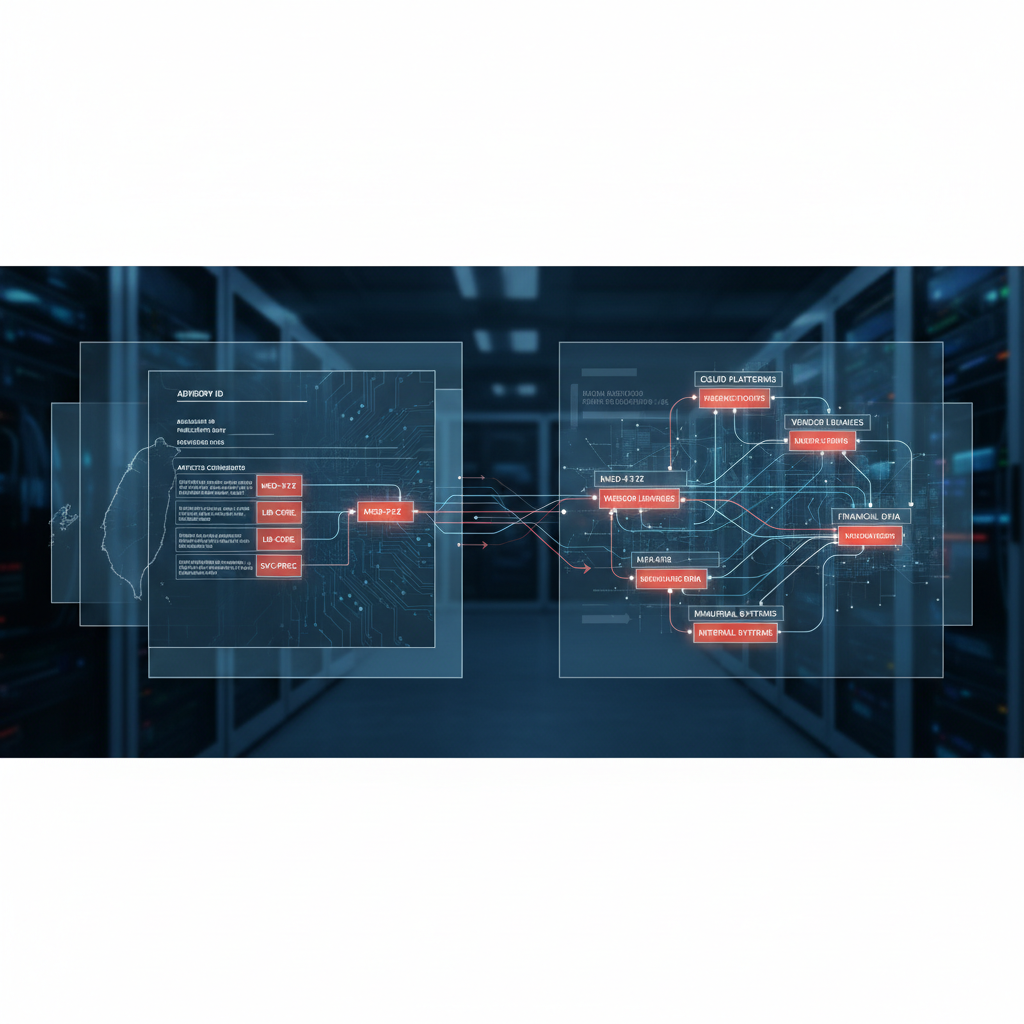
Executive Summary: This practical tutorial guides global security teams in evaluating Taiwan CERT/CC vulnerability notes for relevance to their enterprise software stack, vendor ecosystem, and cloud dependencies. It provides a step-by-step workflow for exposure assessment, ownership mapping, and escalation decisions without relying on arbitrary thresholds or publication cadences.
Why It Matters
This tutorial provides a structured yet flexible approach for global security teams to assess the relevance of Taiwan CERT/CC vulnerability notes to their own operational environment. The core guidance emphasizes starting with technical verification: identifying the specific software, library, or component referenced in the note and checking its presence in internal asset inventories, software bills of materials, or vendor dependency lists. This first step ensures that assessment is grounded in actual exposure rather than speculative risk.
Ownership of the assessment process should be clearly defined but adaptable. The tutorial recommends assigning responsibility to security operations or product security teams, with collaboration from supply chain and cloud architecture stakeholders. Ownership is not tied to rigid job titles but to functional responsibility for system criticality and dependency mapping, allowing organizations to adapt the workflow to their internal structure.
Technical Signal
Escalation guidance avoids numeric thresholds or fixed deadlines. Instead, it advises teams to consider escalation when the affected component is used in internet-facing systems, critical infrastructure, or software that forms part of the supply chain. The language is intentionally flexible: escalate when the team can verify exposure and potential impact, not because a certain number of days have passed or a severity score exceeds a preset value. This supports risk-based decision making without encouraging mechanical compliance.
When confirmation of use cannot be established, the tutorial advises treating the item as uncertain and routing it for further review. This prevents both false negatives (assuming safety without verification) and false positives (over-escalating based on incomplete information). Teams are encouraged to use the vulnerability note as a trigger to query internal tracking systems, consult vendor security advisories, or reach out to product owners for clarification.
Operational Impact
Finally, the tutorial positions Taiwan CERT/CC notes as one component of a broader, ongoing vulnerability monitoring practice. It discourages prescribing specific review frequencies (e.g., daily or weekly) and instead recommends integrating these notes into existing, recurring cycles of threat and vulnerability intelligence consumption. This approach respects the variability in organizational maturity and resource availability while maintaining vigilance toward regionally specific threats that may have global implications through interconnected software supply chains.
Treat TWCERT/CC as a monitoring input, not as proof that every feed entry deserves a public article. The practical value is a repeatable triage layer: capture the source title, original URL, visible publication date, affected product or service when available, and the operational surface involved. When those fields are thin or ambiguous, the item should stay in the tracker as monitoring data rather than becoming a standalone post.
What To Watch
For readers watching Taiwan, the escalation question is whether the notice touches a real local, national, regional, sector, or operating dependency. Supplier exposure, cloud identity, telecom, financial services, government systems, semiconductor or manufacturing links, public-sector technology, managed service providers, and internet-facing infrastructure are strong signals even before global media frames them as cross-border events.
A healthy workflow separates three outcomes. Routine items become searchable tracker records. Items with clear patch urgency, exploitation language, named affected technology, or cross-border supplier relevance become article candidates. Items that are old, duplicated, underspecified, or mostly vendor boilerplate should remain monitor-only even if they contain familiar cybersecurity keywords.
The useful reader task is comparison. Analysts should ask whether the same vendor, CVE family, attack surface, sector, or region appears across multiple sources. A single notice can be weak by itself, while a cluster across CERT, vendor, and security research sources can justify a higher-priority brief. Nogosee should preserve that distinction so the site behaves like an intelligence tracker instead of a rewrite feed.
For structured coverage, tag each record consistently by region, source, sector, technology surface, and monitoring status. That makes the database useful even on quiet news days because readers can still filter for technology, manufacturing, cloud services, finance, healthcare, inspect current watchlist records, and decide which official source deserves direct follow-up.
Readers should use the official source link as the authority for current advisories. Nogosee's role is to translate and organize the signal, explain why it may matter to cyber, AI, cloud, and operations teams, and show when a local Taiwan item becomes relevant to global operators. It should not replace incident-response guidance, vendor documentation, or primary CERT instructions.
Event Type: security
Importance: medium
Affected Sectors
- cloud services
- finance
- healthcare
- manufacturing
- technology
Frequently Asked Questions
What is the first step when reviewing a Taiwan CERT/CC vulnerability note?
Begin by identifying the affected software, library, or component named in the vulnerability note. Cross-reference this with your asset inventory, software bill of materials (SBOM), or vendor dependency list to determine if the item is present in your environment.
How should teams determine if a Taiwan CERT/CC vulnerability requires escalation?
Escalation should be considered when the affected component is used in internet-facing systems, critical infrastructure, or supply-chain software. Use flexible review language: escalate when the team can verify exposure and potential impact, not based on fixed thresholds or timeframes.
Who should own the assessment of Taiwan CERT/CC vulnerability notes in an organization?
Vulnerability triage should be owned by the security operations or product security team, with input from software supply chain managers and cloud architecture leads. Assign ownership based on system criticality and dependency mapping, not rigid role definitions.
What should teams do if they cannot confirm whether a component from a Taiwan CERT/CC note is used in their environment?
Treat the item as uncertain and route it for further review. Use the vulnerability note as a starting point to query asset inventories, dependency trackers, or vendor security contacts. Do not assume absence of use without verification.
How often should teams review Taiwan CERT/CC vulnerability notes as part of their workflow?
Incorporate Taiwan CERT/CC notes into regular vulnerability monitoring cycles. Avoid prescribing fixed cadences; instead, treat them as part of a broader, recurring review of regional CERT feeds alongside other trusted sources.